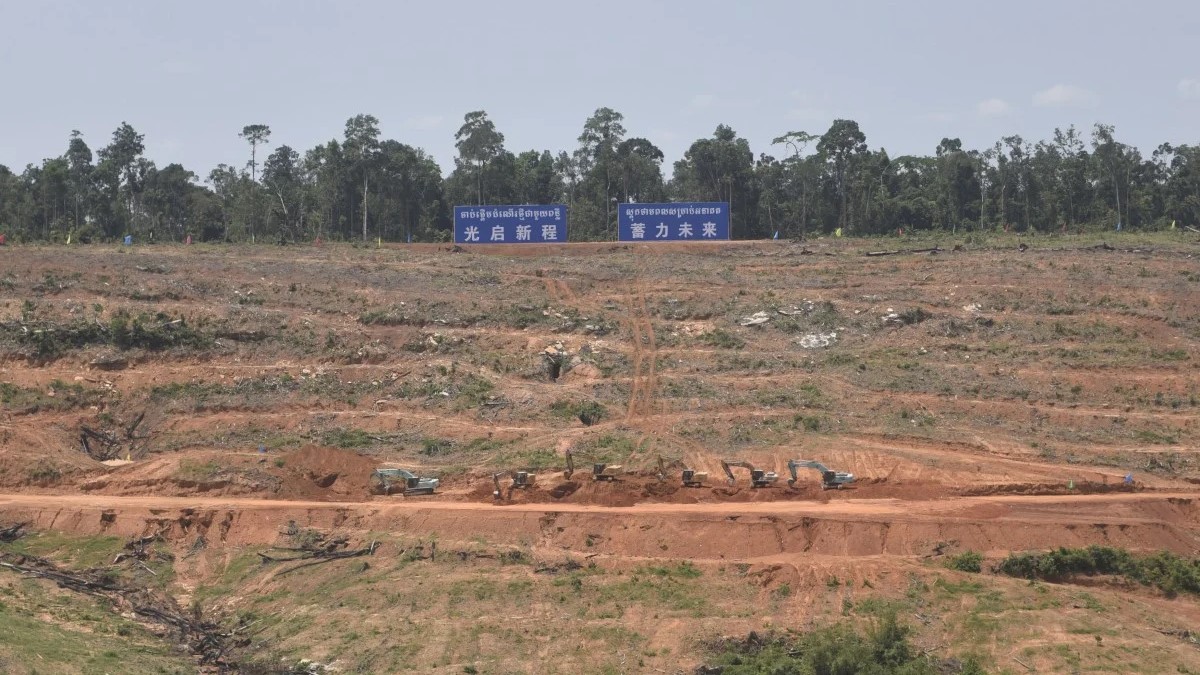
Construction of a US$1 billion Chinese-invested hydropower station has begun in Cambodia to facilitate the Southeast Asian country’s use of renewable energy as the fallout from the Iran war constricts developing countries’ access to traditional fuel supplies.
Work on the Upper Tatay pumped-storage hydropower project in the hilly southwestern province of Koh Kong started on April 10, Xinhua reported, describing it as a future “green power bank” for Cambodia’s national grid.
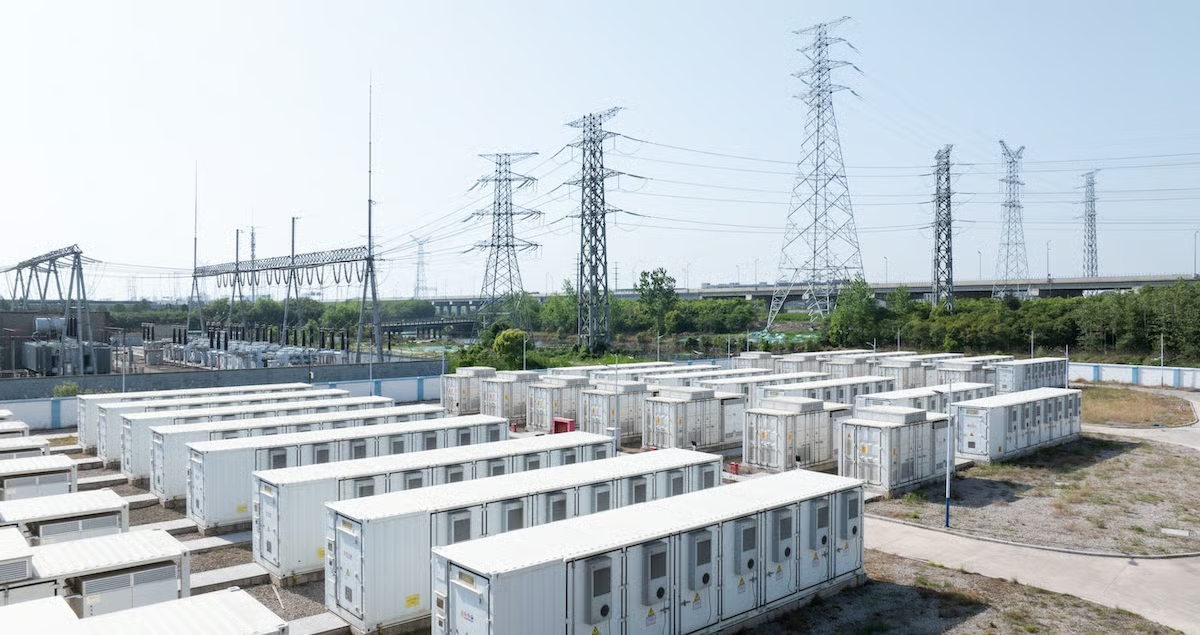
It said the project was a “large-scale rechargeable battery system” with an installed capacity of one gigawatt.
The investment was big for Cambodia given its relatively small economy, said Jayant Menon, a visiting senior fellow at the ISEAS – Yusof Ishak Institute in Singapore. It also came as Cambodia, like other developing countries, fretted over the price and availability of imported fuel due to Middle East bottlenecks and a lack of domestic refining, Menon said.
“The fuel crisis has hit Cambodia very hard,” he said.
Investors from China also helped build Cambodia’s US$2 billion Phnom Penh-Sihanoukville Expressway and an airport that opened last year near Phnom Penh. State-owned China National Heavy Machinery Corporation is developing the Upper Tatay project.
Xinhua said Chinese-built power plants had helped raise Cambodia’s electricity access rate – the percentage of the population with reliable access to electricity in their home – from roughly 50 per cent to about 96 per cent since 2010. It said the station would provide for “stable integration” of intermittent solar and wind energy.
During low demand periods, excess power from the station in Cambodia’s Tatay River basin will pump water from a lower reservoir to an upper one. When demand peaks, water will be sent down through turbines to generate electricity. The station is expected to be completed in 2029.
“With economic growth in China slowing, state-owned enterprises need to look at friendly countries like Cambodia to pursue growth opportunities,” Menon said. “If due diligence is undertaken faithfully, this project will benefit both countries.”
Xinhua quoted Cambodian Mines and Energy Minister Keo Ratanak as saying it was his country’s first “such sophisticated energy storage project” and also linking it to disruptions to global oil and gas supply.
Energy storage technology has become popular around the world as governments look for ways to handle fluctuations in solar and wind energy without using fossil fuels. Cambodia, like many other countries, was looking for ways to meet green energy transition targets even before this year’s Middle East conflict.
The hydro station would help advance Cambodia towards a target of 70 per cent clean energy by 2030, media outlets in the country reported, quoting China’s ambassador to Cambodia, Wang Wenbin.
Elsewhere in Southeast Asia, the first phase of a Chinese-invested 1GW solar project connected to the grid in Laos on April 7, and the US$1.67 billion Batang Toru hydroelectric project in Indonesia – now stalled over environmental issues – has Chinese backing.