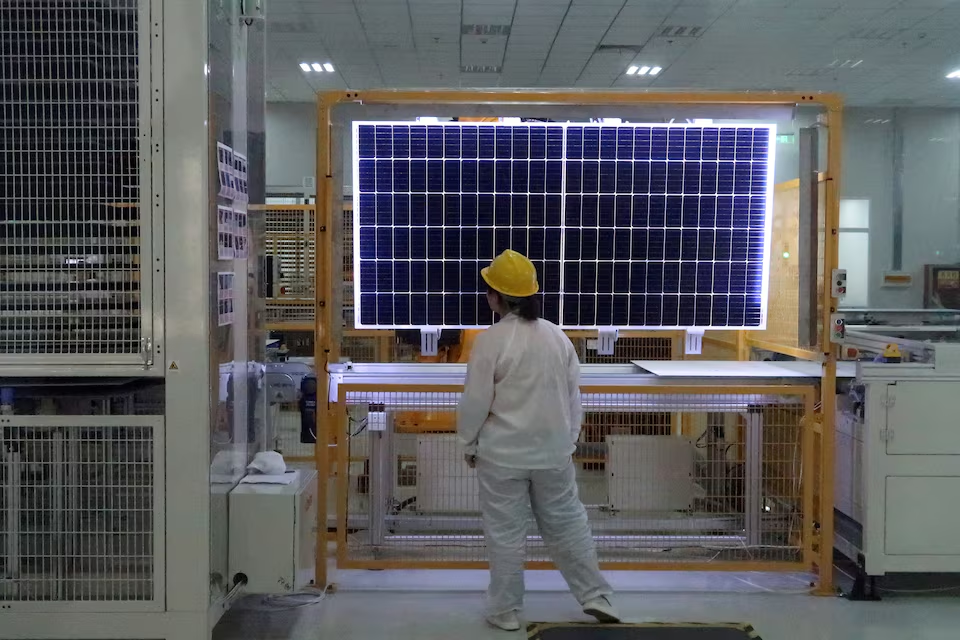
China's biggest solar manufacturers cut another fifth of their workforces last year, company filings show, as Beijing's pledge to tackle overcapacity has yet to pull the industry out of losses.
Chinese solar companies have built enough capacity to meet world demand roughly twice over, and have lost money, individually and collectively, for years despite record installations.
Plans launched last year by a group of top polysilicon manufacturers to consolidate the upstream sector and lift prices across the industry fell apart because of limited support from the sector, analysts say.
"The only way to quickly resolve this is either the plan last year, you acquire others, or suddenly there is an earthquake or natural disaster and half of the capacity is just suddenly gone," Jefferies analyst Alan Lau told Reuters.
While the filings cover 2025, Morningstar analyst Cheng Wang said job cuts have likely continued. The industry has been hit this year by pricing reforms in China that replaced guaranteed returns for renewables with market-based auctions, dampening demand for solar installations.
As a result, Jefferies expects China to install 150 to 200 gigawatts (GW) of solar this year, down from a record 315 GW in 2025. The global market also hasn't grown. China's exports of solar cells and panels fell 10% year on year from January to August, on a volume basis.
The top five manufacturers' average module selling price fell to $130 per kilowatt in 2025 from $350/kW in 2019, according to Thunder Said Energy, an energy technology research consultancy, and their average EBIT margin worsened to -13% from -8% in 2024. EBIT margin measures how much of a company's revenue it makes as profit, or loss, after accounting for costs and operating expenses.