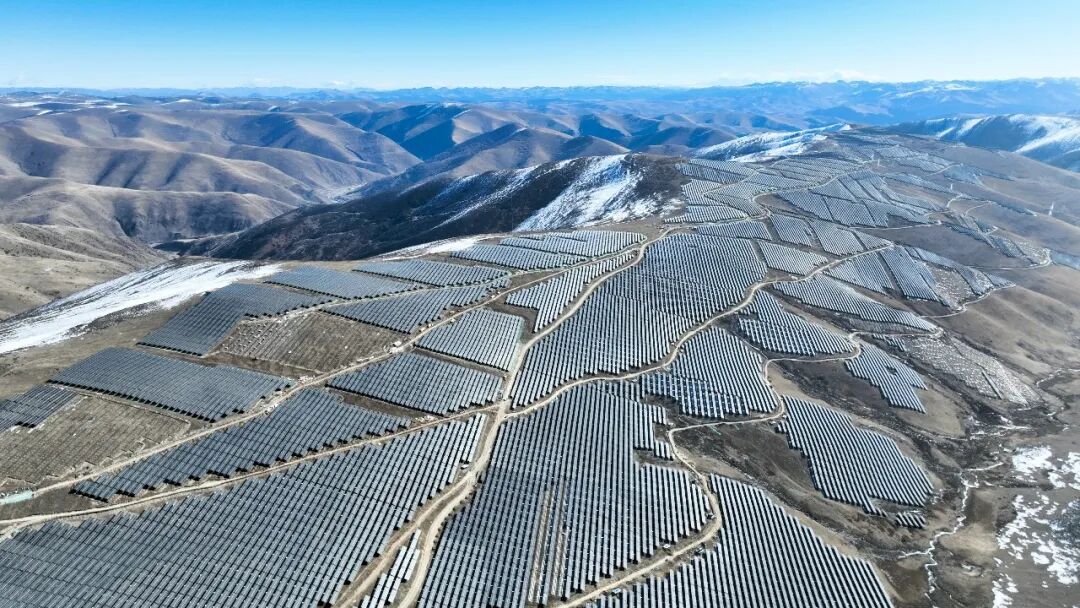
Yalong River Hydropower Development Co., Ltd., a subsidiary of China’s State Development & Investment Corp. (SDIC), has commissioned the 1 GW Suorong photovoltaic power station in Sichuan province, adding another utility-scale asset to the country’s integrated “hydro-wind-solar” energy strategy in the upper Yangtze region.
The plant is located in Litang County, Ganzi Tibetan Autonomous Prefecture, at approximately 4,600 m above sea level, making it the third-highest PV facility worldwide after China Huadian Corp‘s 100 MW facility at an altitude of 5,228 meters, and Dynavolt Renewable Energy Technology‘s 40 MW/193 MWh solar-plus-storage facility at 4,700 m.
Module supply for the 1 GW Suorong PV plant was split between two Chinese manufacturers. JA Solar delivered 808 MW of modules, while Yingli Solar supplied 406 MW over roughly four months, despite challenging plateau conditions, including snow, hail, and debris-flow disruptions. Yingli said its upgraded packaging and logistics tracking enabled the delivery of 657,725 modules without abrasion-related damage.
Suorong forms part of a wider hydro‑solar configuration that pairs PV output with upstream hydropower flexibility, helping to smooth generation variability and increase utilization of transmission corridors. Solar power from the project is integrated into the same grid infrastructure as nearby hydropower facilities operated by SDIC unit Yalong Hydro on the Yalong River, whose combined installed capacity is around 21 GW.
In the Yalong River region, SDIC also operates the 1 GW Chabulang PV plant, along with several smaller solar facilities.
Recently, researchers from Chinese energy company Yunnan Longyuan New Energy have proposed a new methodology for the designing of utility-scale PV plants in hilly or mountainous regions.