A new study by Trinomics, in collaboration with DTU Wind, shows that strategically earmarking EU funding for wind innovation and industrial scale-up delivers major economic and security benefits for Europe. By 2040, each €1 of public funding for wind generates €7 in annual economic returns, while significantly boosting the EU’s jobs, exports, and energy security.
A study by Trinomics shows that EU funding for industrial scale-up and innovation in wind energy is a no-regret option with a high-return on investment. The study proposes the creation of a dedicated Fund for Wind Research and Competitiveness to boost Europe’s competitiveness in the wind industry.
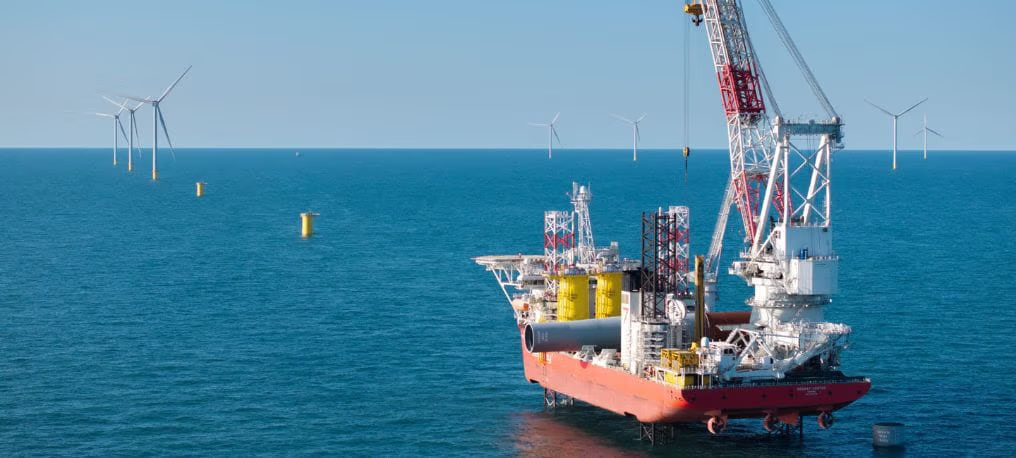
The proposed Wind Fund would provide €11.6bn in support across the entire European wind value chain. Around €9 billion should be dedicated to ramping up manufacturing capacity to ensure that the European supply chain can continue to meet the growing demand driven by Europe’s bid for energy independence. Earmarking this funding within the European Competitiveness Fund will ensure a strategic and efficient allocation of resources.
High returns for Europe’s competitiveness, resilience and strategic autonomy
Allocating €11.6bn in targeted wind funding would deliver following returns by 2040:
- Add €33 billion per year in gross value added to the EU economy
- Support 180,000 additional jobs across the value chain
- Increase EU wind equipment exports by €12.6 billion annually
- Ensure that up to 89% of value remains in Europe (vs. 47% without targeted support)
- Strengthen energy security by displacing 70 bcm of imported gas annually (≈700 LNG shipments)
Global competition calls for a focused approach to wind technology leadership
EU funding for wind today does not match the scale of the opportunity. The study finds that wind typically receives well under 2% of the budgets in EU programmes it is eligible for. Funding is spread across 12 different programmes, mostly with broad, technology‑neutral calls. Approval is slow. Average time‑to‑contract in Horizon Europe and the Innovation Fund is over 9 months. This fragmented and limited support penalises the European industry vis-à-vis international competition.
Global competition in wind technology is intensifying. China is moving fast and backing its industry with much stronger public support. Chinese turbine manufacturers received between two and five times more public support than European manufacturers over recent years. This funding advantage is helping them scale faster and compete more aggressively on global markets.
The study confirms that investing in wind is not only an energy policy choice, but a core industrial strategy. At a time when global competitors are rapidly increasing support for their manufacturers, failing to adequately fund wind in the next EU budget would risk a structural loss of market share, industrial capacity, jobs, and potentially control over critical energy infrastructure.
The message is clear. Europe needs a smarter way to use the tools it already has. The next EU budget should earmark funding for wind to ensure that support is focused, predictable and fast enough to match industrial needs. Done right, that means more European manufacturing, more innovation and more exports, with stronger supply chains and higher energy security. It also means keeping more of Europe’s wind value in Europe, while reducing dependence on imported fuels.