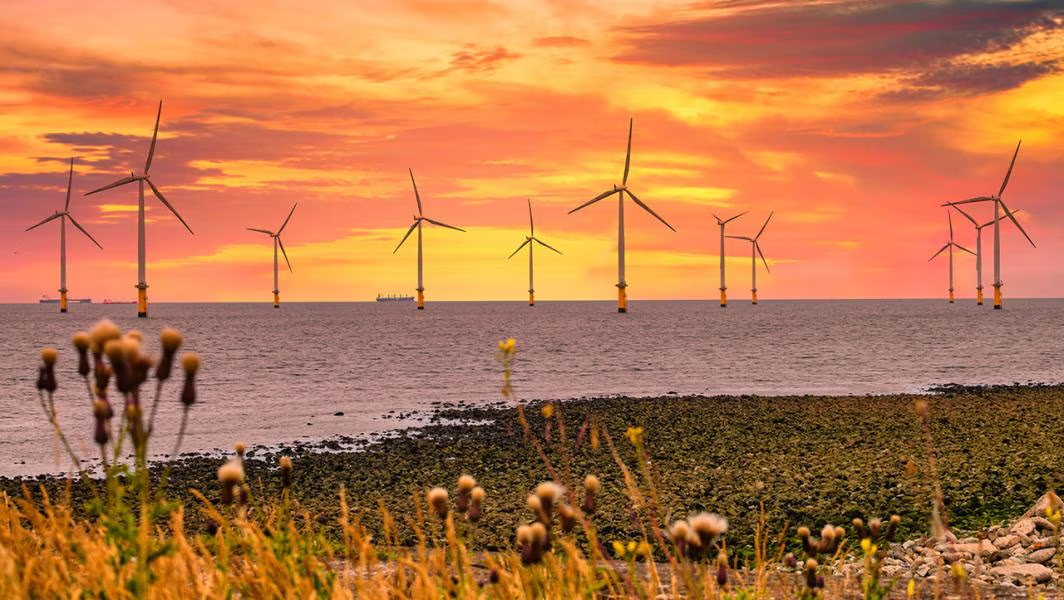
Global installed wind power capacity is expected to exceed 2 terawatts (TW) by 2030, a milestone that is also set to support worldwide economic growth, according to the Global Wind Energy Council (GWEC).
GWEC said in a statement that global wind installations are projected to surpass 150 gigawatts (GW) in 2025, driven largely by rapid expansion across Asia-Pacific markets, which have accounted for an increasing share of new capacity over the past decade.
The trend is expected to continue in the coming years, underscoring the region's growing role in meeting rising energy demand while supporting sustainable development.
India set a new national record last year with 6.3 GW of newly installed wind capacity. Europe added 22.5 GW. of new capacity, about 5 GW more than in 2024.
In the US more than 7 GW of new wind power capacity is expected to come online, while China had installed 89 GW by the end of November, putting the country on track to surpass 100 GW.
If current growth trends persist, global installed wind capacity is forecast to exceed 2 TW by the end of the decade, reinforcing wind energy’s role as a key driver of both energy transition and economic development.
"Economic growth and renewable energy clearly go hand in hand," GWEC Chief Executive Ben Backwell said.
Backwell noted that more than 225,000 wind turbines in China are generating over 1,000 TWh of electricity annually, helping reduce thermal power generation even as national energy consumption reaches record highs.
In India, soaring electricity demand is being met through a record year for new wind capacity alongside major solar investments, he said. In the UK, the record-setting AR7 auction is expected to bring in £22 billion ($28 billion) in private investment. Similar momentum is emerging in Vietnam, South Korea and the Philippines.
"The reality of the modern energy system is becoming increasingly clear, and wind energy is cementing its place as the foundation of the age of electricity," Backwell said.