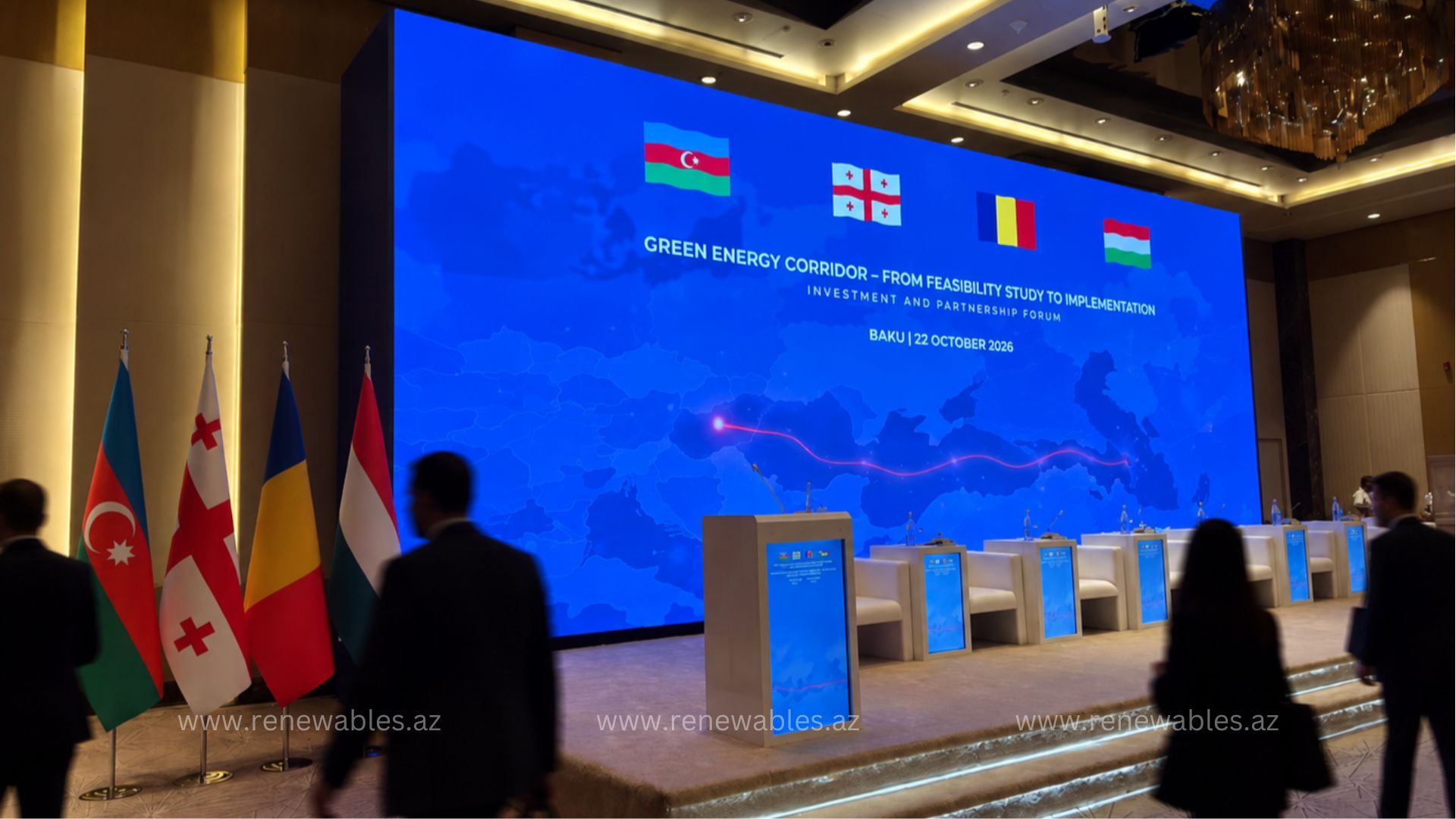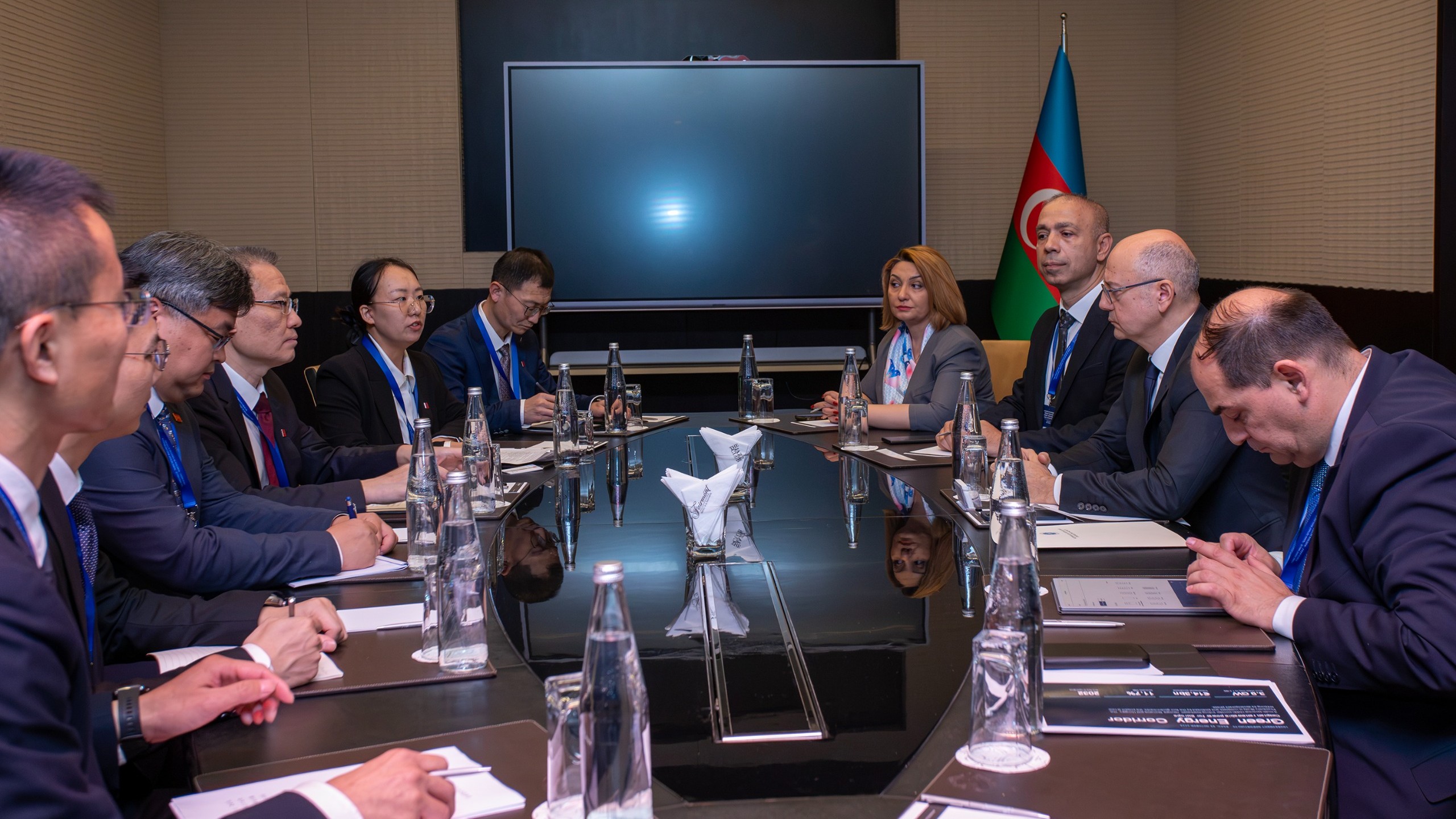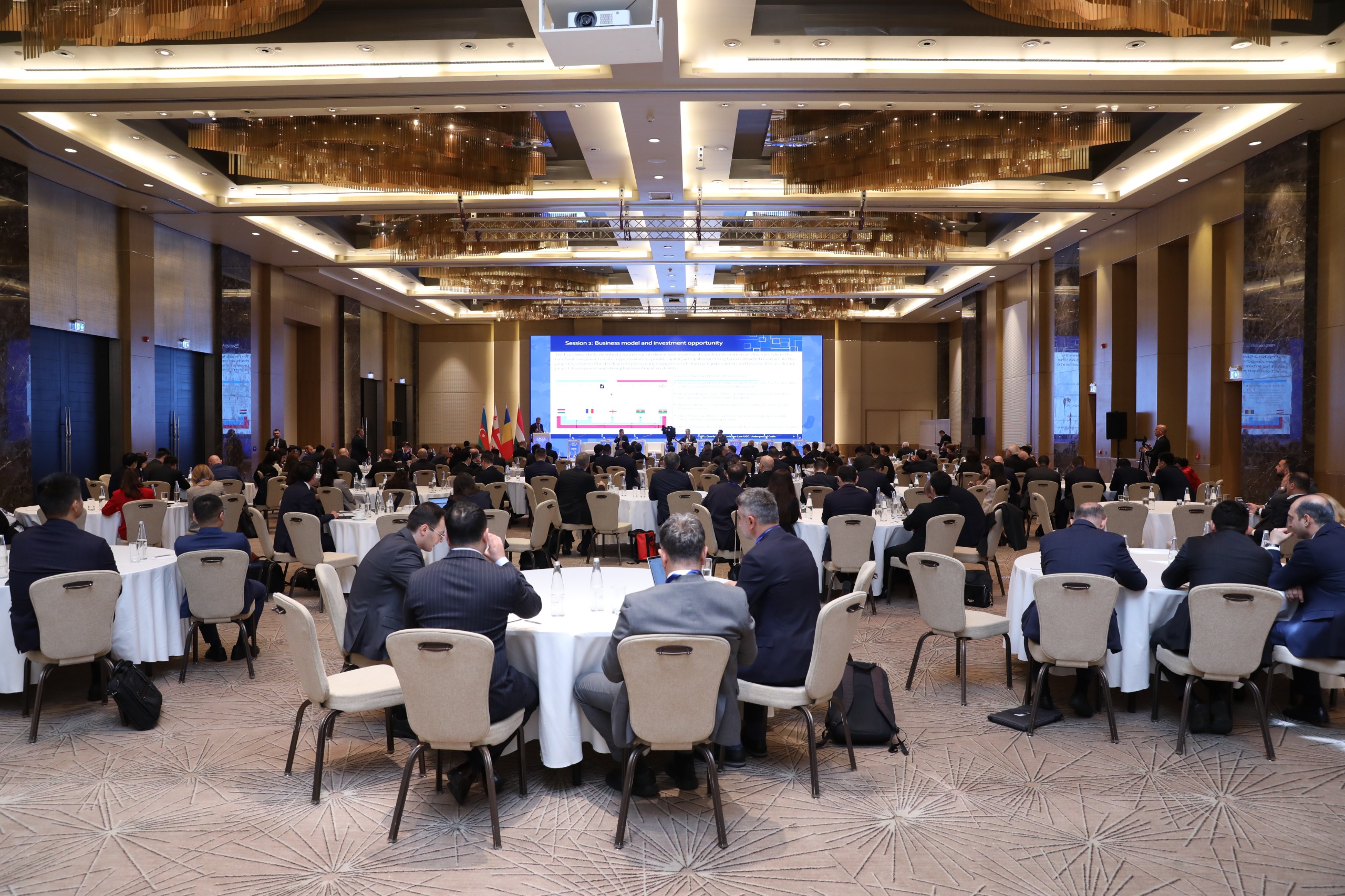
The Green Energy Corridor: From Feasibility Study to Implementation Forum, dedicated to investment and partnership opportunities for the Caspian-Black Sea-Europe Green Energy Corridor project, is being held in Baku.
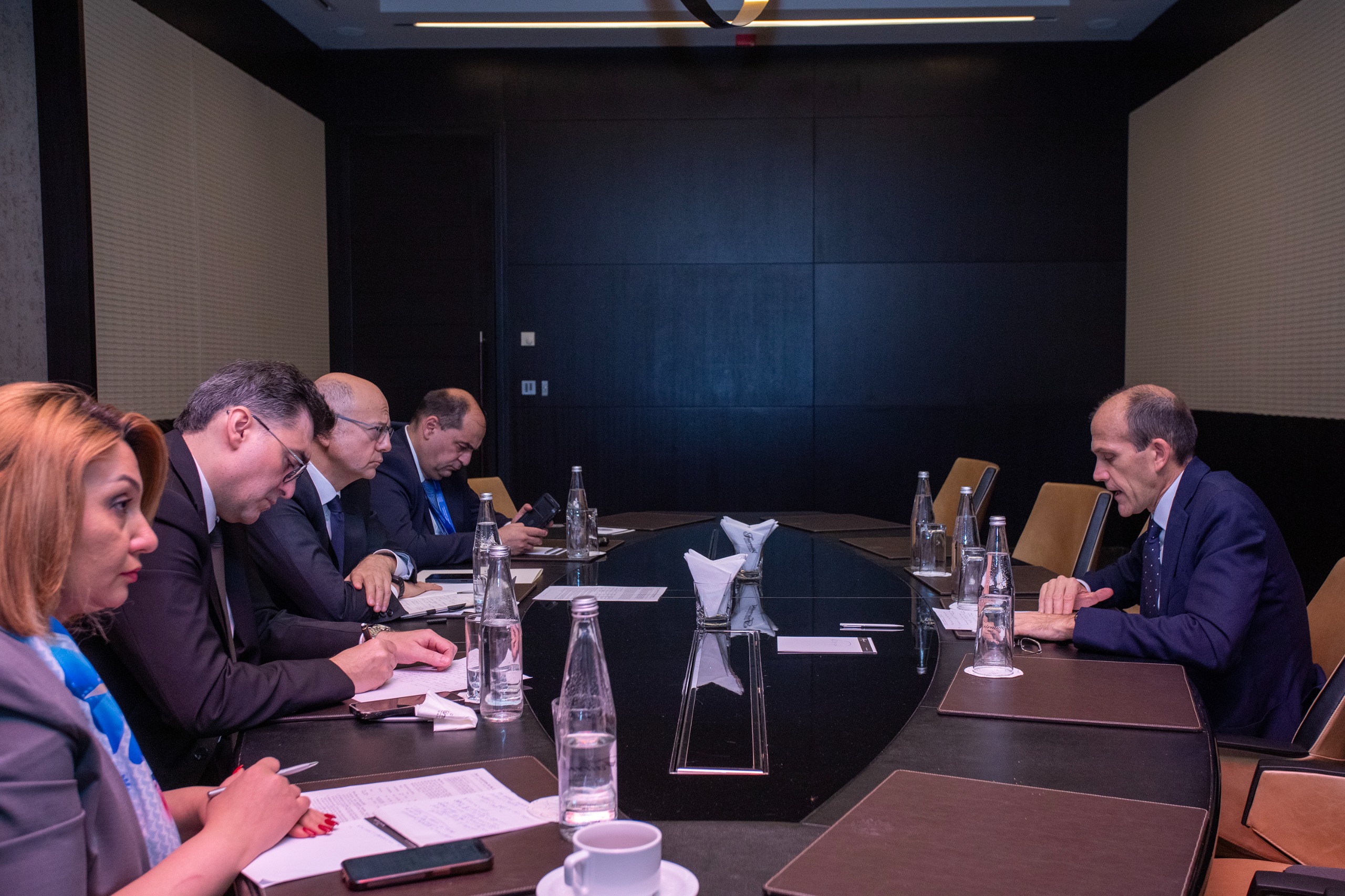
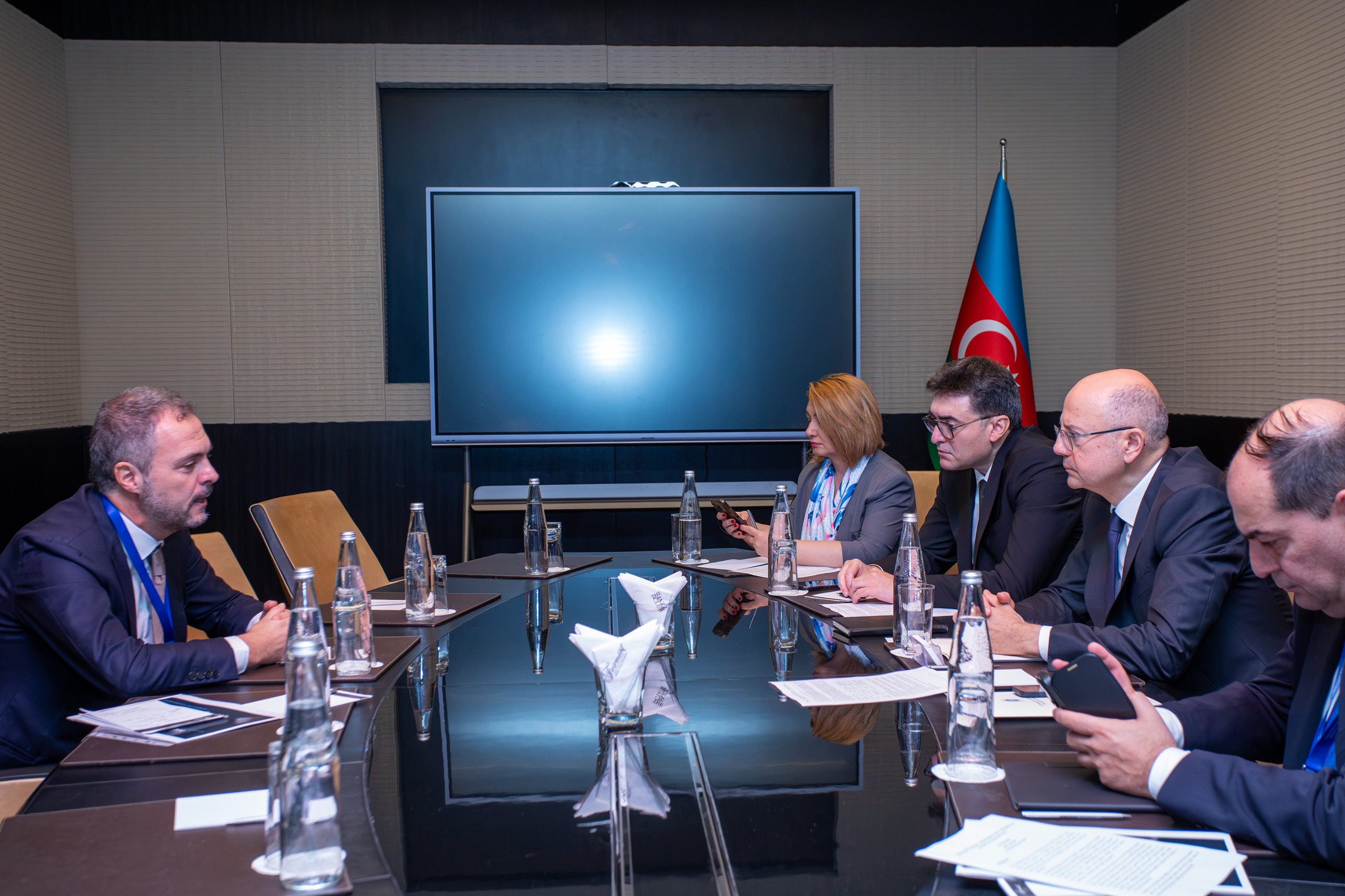
Renewables.az reports that Azerbaijan’s Energy Minister Parviz Shahbazov delivered a speech at the event.
Speaking at the opening of the Forum, Minister of Energy Parviz Shahbazov emphasized the strategic importance of the Caspian-Black Sea-Europe Green Energy Corridor for regional energy security, diversification of energy supplies and the green energy transition. It was noted that the project, initiated under the Strategic Partnership Agreement signed by Azerbaijan, Georgia, Romania and Hungary in Bucharest in 2022, had been confirmed as technically feasible and economically attractive by the feasibility study completed in July this year. The Minister highlighted the project's special role in the policy pursued by President of Azerbaijan Ilham Aliyev to transform the country into a regional hub for green energy generation, transmission and export. He also noted that political support for the project had been reaffirmed during European Commission President Ursula von der Leyen's most recent visit to Baku. It was stated that the project's inclusion in the draft Ten-Year Network Development Plan (TYNDP) 2026 and ongoing efforts on Project of Mutual Interest (PMI) status were strengthening its investment prospects.
It was noted that the Green Energy Corridor, approximately 3,000 kilometres long, is expected to be commissioned in phases starting in 2032, with its transmission capacity reaching 4 GW. According to the feasibility study, the project will facilitate the development of at least 8 GW of renewable energy capacity in the region, enable the transmission of approximately 20 billion kilowatt-hours of electricity annually to Europe from 2040, and reduce carbon emissions by up to 3.6 million tonnes. The importance of deploying advanced technological solutions for laying the submarine cable at depths of up to 2200 metres in the Black Sea was also emphasized. To ensure the project's commercial viability, a hybrid business model combining regulated and commercial components is under consideration. The model is based on long-term Power Purchase Agreements (PPAs), private equity participation and the development of cross-border electricity trade. The Minister stressed that the involvement of international financial institutions and private investors, a reliable business model and long-term commercial agreements are essential for reaching the Final Investment Decision. "Our objective is to transform the Green Energy Corridor into a regional infrastructure project with a clear business model, a sustainable financial structure and attractive conditions for investors. Azerbaijan’s strategic position, extensive experience in implementing international energy projects, and strong relations built on mutual trust with partner countries provide a solid foundation for achieving this objective. We believe that today’s Forum will make a significant contribution to forging new partnerships, identifying concrete investment opportunities, and bringing the Green Energy Corridor closer to the final investment decision envisaged for 2029,” Minister Parviz Shahbazov stated.
The Forum aims to accelerate the project's transition from the feasibility study stage to investment and practical implementation, discuss its business model, financing structure and commercial prospects with potential partners, and contribute to preparations for the Final Investment Decision (FID) scheduled for 2029.
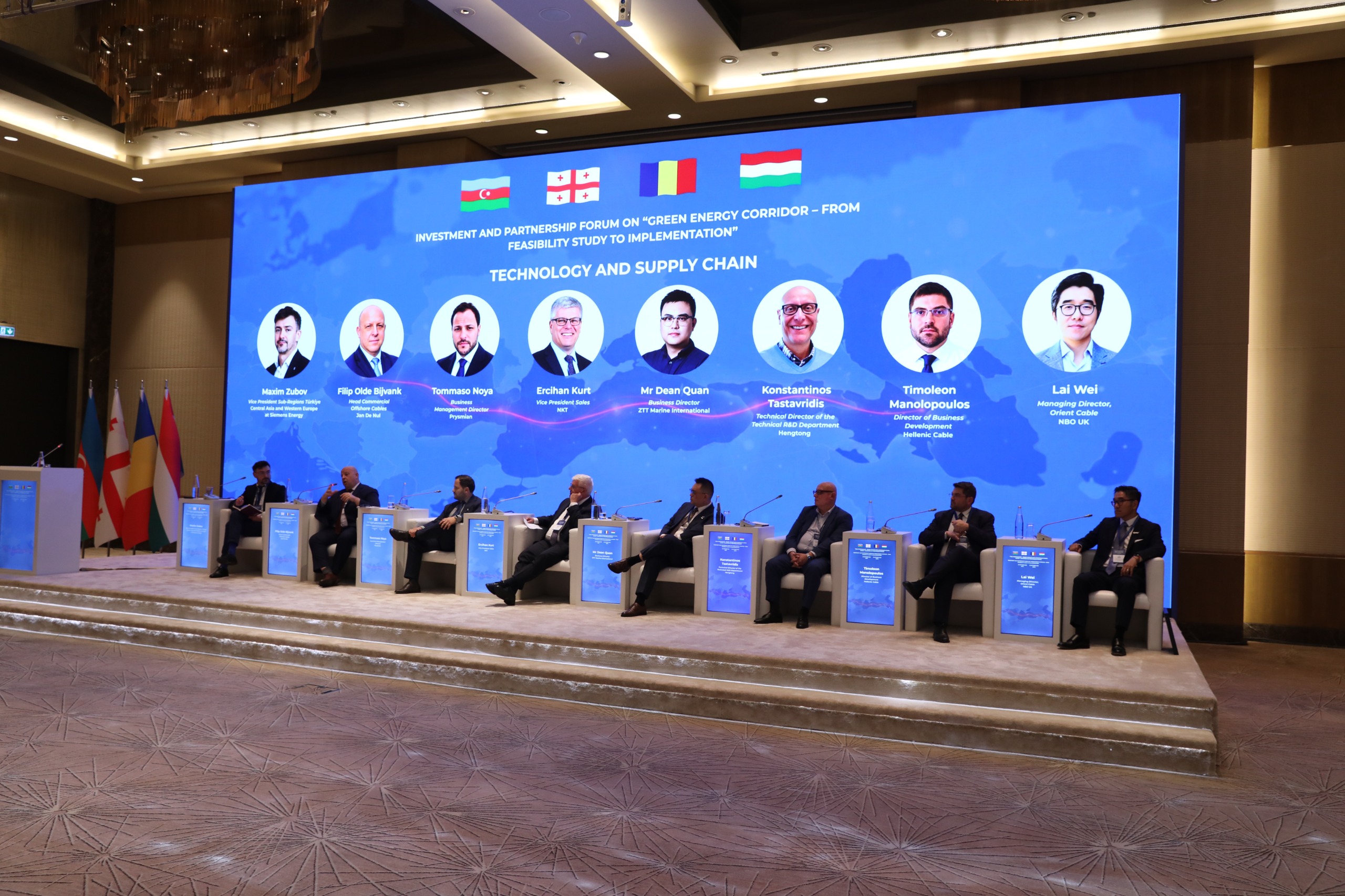
The event brings together representatives of government institutions from Azerbaijan and partner countries, the European Union, international financial institutions, investment funds, energy companies, offtakers, transmission system operators, cable manufacturers, technology suppliers, engineering firms and insurance companies. Representatives from the World Bank, European Investment Bank (EIB), European Bank for Reconstruction and Development (EBRD), Asian Development Bank (ADB), Black Sea Trade and Development Bank, Islamic Development Bank, Brookfield Asset Management, ACWA Power, Masdar, SOCAR Green, China Datang, State Grid Corporation of China, PowerChina, Siemens Energy, ABB, Hitachi Energy, Xlinks, Zhero, TotalEnergies, Jan De Nul, Prysmian, NKT, Hellenic Cables, ZTT, Hengtong, Orient Cable, Mitsui, CESI and other international companies participated at the forum.
The Forum continues with six thematic sessions.
A session dedicated to Feasibility Study results - key technical and economic findings for the Caspian-Black Sea-Europe Green Energy Corridor project was held within the Forum in Baku.
During the session, international engineering and consulting company CESI presented the key findings of its study assessing the technical and economic feasibility of the project. Global Markets and Business Development Director Andrea Meola and Senior Energy Consultant Filippo Del Grosso provided information on the project's technical parameters, economic indicators and implementation prospects. It was noted that the completion of the feasibility study for the project, which involves Azerbaijan, Georgia, Romania and Hungary, marks a significant milestone in its development. The study's findings provide a solid foundation for structuring the project's commercial framework, assessing financing opportunities and preparing for the Final Investment Decision (FID).
A panel session dedicated to the business model and investment opportunities for the Green Energy Corridor project was held as part of Forum. Moderated by Global Markets and Business Development Director of CESI Andrea Meola, the session brought together General Director of SOCAR Green Elmir Musayev, CEO of Xlinks James Humfrey, Managing Director of Zhero Michele Vadora, and Area Manager of AFRY - DNV Global Mohammed Atif.
The session featured an exchange of views on the proposed commercial model for the Green Energy Corridor, the project's governance structure, ownership and participation mechanisms, development roadmap, and opportunities for strategic equity partners. The discussions focused on the role of the private sector in implementing large-scale energy infrastructure projects, enhancing investment attractiveness, and ensuring long-term commercial viability.
A panel session dedicated to the off-take and market opportunities was held at the Forum. The session, moderated by Nuran Karimov, Managing Partner of Deloitte, was attended by Atilla Bally, Advisor at MVM, Florin Stanciu, Head of Corporate Finance at Transelectrica, Murad Sadikhov, Country Manager at Masdar, Uygar Durgunay, Executive Managing Officer at ACWA Power, and Tan Xiaofeng, Deputy General Director of Power China Eurasia Region.
The session discussed the commercial opportunities for delivering and selling renewable electricity produced in the Caspian region to European markets. The main focus was directed towards the implementation of long-term Power Purchase Agreements (PPAs), identification of potential buyers, market demand, cross-border electricity trade, and the commercial prospects of the project. Discussions were held on cooperation mechanisms between renewable energy producers, electricity suppliers, traders, and corporate buyers, as well as on the formation of long-term commercial bases for energy exports.
Within the framework of the Forum, Financing the Green Energy Corridor - Investment and partnership roundtable was organized. The discussions, moderated by Claire Nicolas, Senior Energy Economist at the World Bank, were attended by Violaine Silvestro Von Kameke, Head of Unit at the European Investment Bank (EIB Global), Nataly Mouravidze, Head of the Azerbaijan Resident Office of the European Bank for Reconstruction and Development, Ziya Aliyev, Vice President of the Black Sea Trade and Development Bank, Faraj Huseynbeyov, Lead Project Officer at the Asian Development Bank, and Arnaud Jouvin, Vice President on Investment and Energy at Brookfield Asset Management.
At the session, possible financing structures for the implementation of the Green Energy Corridor, risk allocation, joint involvement of state and private capital, blended finance and bankability were discussed. It was emphasized in the discussions that the implementation of such large-scale and cross-border energy infrastructure projects requires close cooperation between international financial institutions, states, and private investors.
A panel session dedicated to the project's risks, insurance, and bankability was held within the Forum. Matthew Bryza, Managing Director of Straife, Taleh Yunsurov, Deputy Chairman of the Management Board of Gala Insurance, Nijat Rasulov, Chief Risk Officer and Board Member of PASHA Insurance, and Irsen Pak, Associate Director of KPMG attended at the session, moderated by Stuart Broad, Senior Vice President of Power and Energy at Marsh McLennan.
Risks that may arise during the implementation of large-scale cross-border energy infrastructure projects, their allocation among project participants, insurance solutions, and the demands of international creditors were discussed at the session. The importance of risk management and insurance coverage for the future financing of the corridor and the adoption of investment decisions was noted at the session.