Wood Mackenzie has said it that a massive solar-plus-storage project currently under construction in the UAE will “redefine baseload power.”
The prediction is one of three Wood Mackenzie has published as part of its “Global solar: Key things to look for in 2026” report.
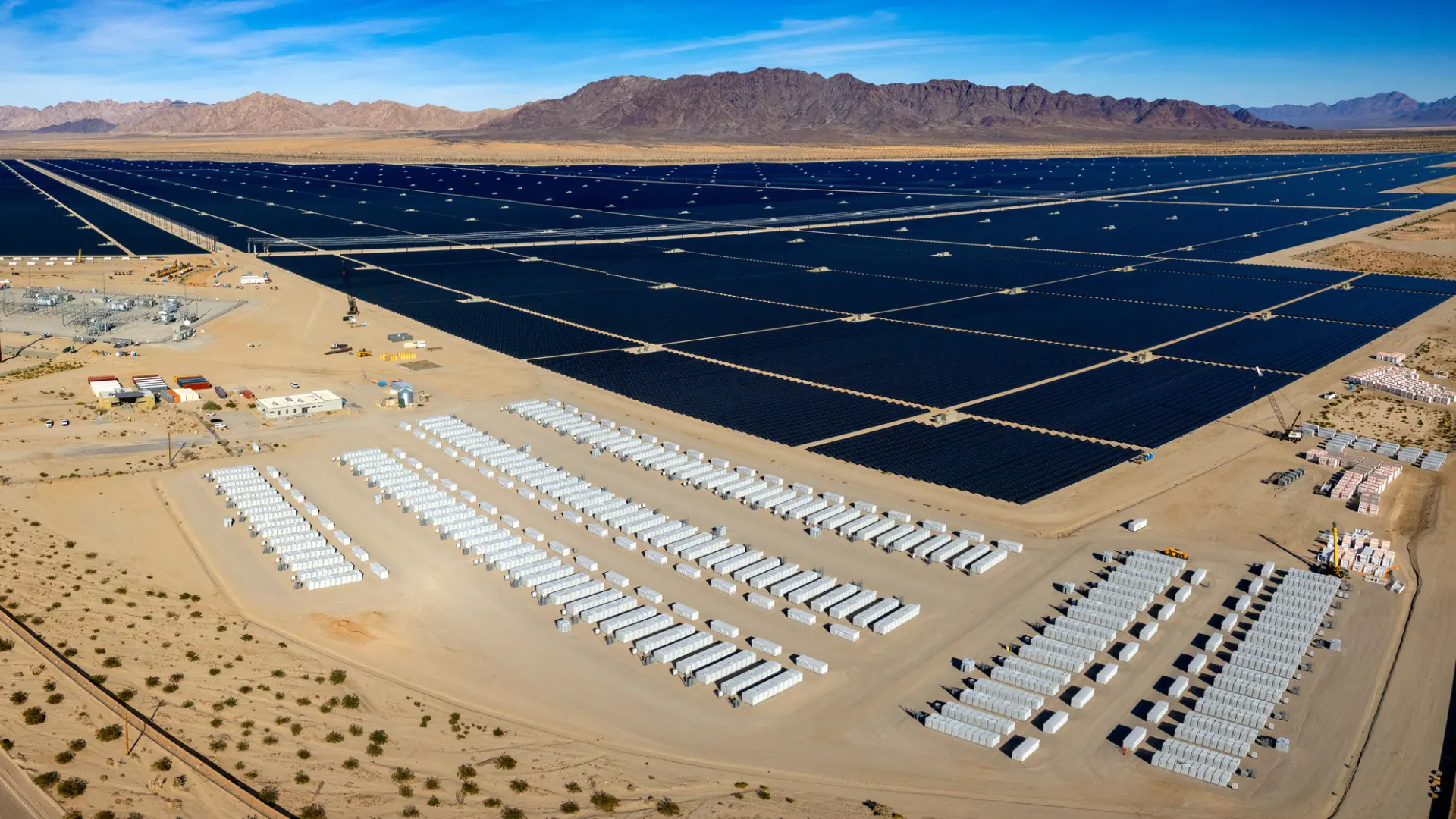
The 5.2 GW solar plus 19 GWh battery energy storage project, under development by Masdar and Emirates Water and Electricity Company (EWEC), which broke ground in October, is the world’s first first gigawatt-scale renewable project engineered to deliver 1 GW of continuous, around-the-clock baseload power.
Michelle Davis, global head of solar for Wood Mackenzie, said the project represents a structural shift in hybrid project development in the region.
Davis noted that while the project is currently too expensive to replicate broadly, at roughly six times the cost of a new gas-fired combined-cycle gas turbine plant, successful project execution and continued cost declines could redefine baseload power.
“Despite the challenging events of 2025, solar market fundamentals and demand will remain strong in 2026, especially as the global economy continues to electrify,” Davis concluded.
The report also forecasts solar to play a major role in meeting the electricity load growth anticipated over the next decade in several regions of the globe.
Annual solar generation, including distributed solar, is expected to grow by 232 GWh, of 65%, in the U.S. between 2026 and 2030, according to Wood Mackenzie’s analysis. This will bring solar closer to gas, which makes up the largest share of electricity generation in the U.S., which is expected to grow by 340 GWh, or 21%, over the next four years.
In the Asia Pacific, solar made up 11% of the power generation mix in 2025 and is forecast to grow to 17% by 2030. Wood Mackenzie expects solar, wind and storage to make up a third of the power generation mix in the region by the end of the decade, having accounted for less than 10% in 2020. The analysis say new power capacity in the region is overwhelmingly directed towards solar due to price competitiveness.
Wood Mackenzie’s final prediction for 2026 is that balcony solar, or plug-in-solar, will begin to take a foothold in the US this year, while continuing its market penetration in Europe.
The market research company explains that prior to early 2025, there was no market for balcony solar in the U.S.. Utah became the first state to enable residential customers to utilize portable solar generation devices that produce up to 1.2 kW of power without the need for a utility interconnection agreement last March, with more than a dozen states introducing similar legislation since.
Wood Mackenzie expects this number to continue growing but also warned that key challenges lie in fragmented electrical standards, lower voltage in U.S. homes, and a larger share of single-family homes without balconies.