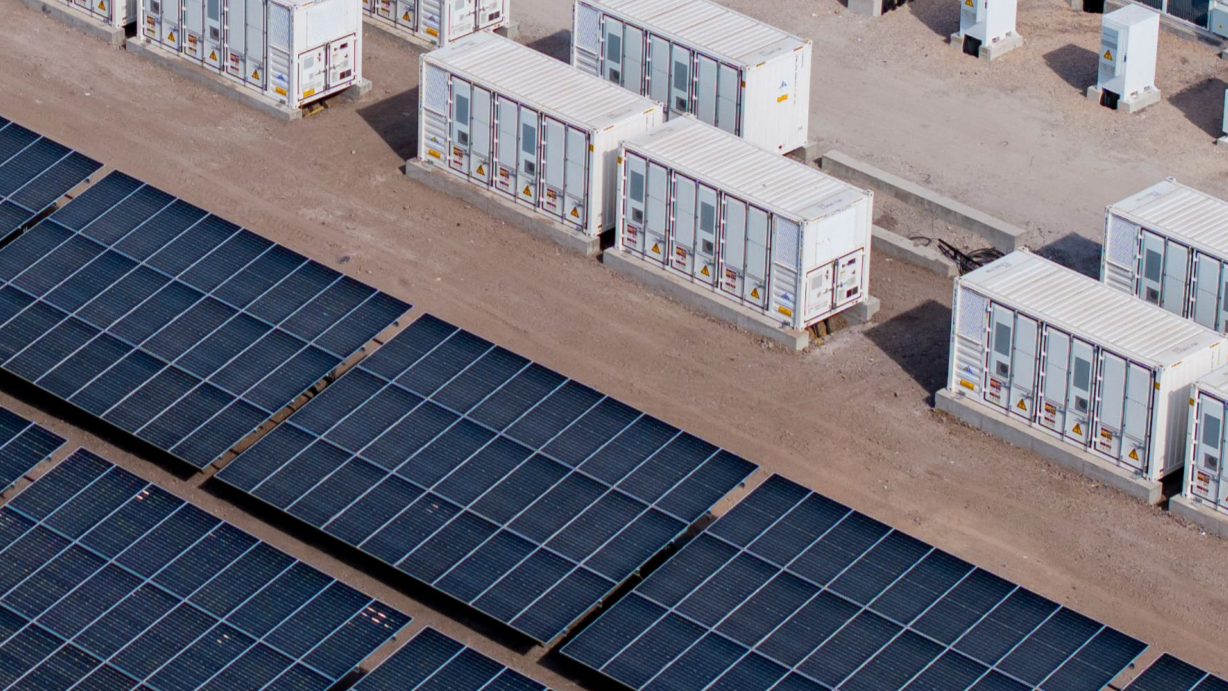
The EU’s battery energy storage fleet has grown for the 12th consecutive year, marking yet another record year for new installations. According to a new report from SolarPower Europe (SPE), 27.1 GWh were deployed in 2025, a 45% year-on-year growth, mostly powered by utility-scale systems.
This confirms that Europe has already expanded its battery fleet tenfold since 2021, rising from 7.8 GWh to 77.3 GWh today. To meet its energy flexibility needs by 2030, the EU must now repeat this tenfold increase, scaling to around 750 GWh by the end of the decade, the industry association said in its market review.
2025 marked a watershed year for Europe’s battery storage market, as utility-scale systems emerged as the main driver of expansion, delivering 55% of all newly added capacity. Improved market conditions and strengthened policy frameworks enabled large-scale projects to reach record levels.
While behind-the-meter storage continues to play a vital role, residential batteries declined for the second consecutive year, dropping 6% to 9.8 GWh, largely due to lower electricity prices and reduced support schemes. Commercial and industrial battery systems saw modest growth but remain a smaller segment of the market.
“The strong uptake of utility-scale batteries in 2025 shows investors are ready, the technology is mature, and the system benefits are clear. But we must now dramatically accelerate deployment. To support EU security and competitiveness, we need a battery fleet capable of supporting a fully flexible, renewable based energy system,” said Walburga Hemetsberger, CEO of SolarPower Europe.
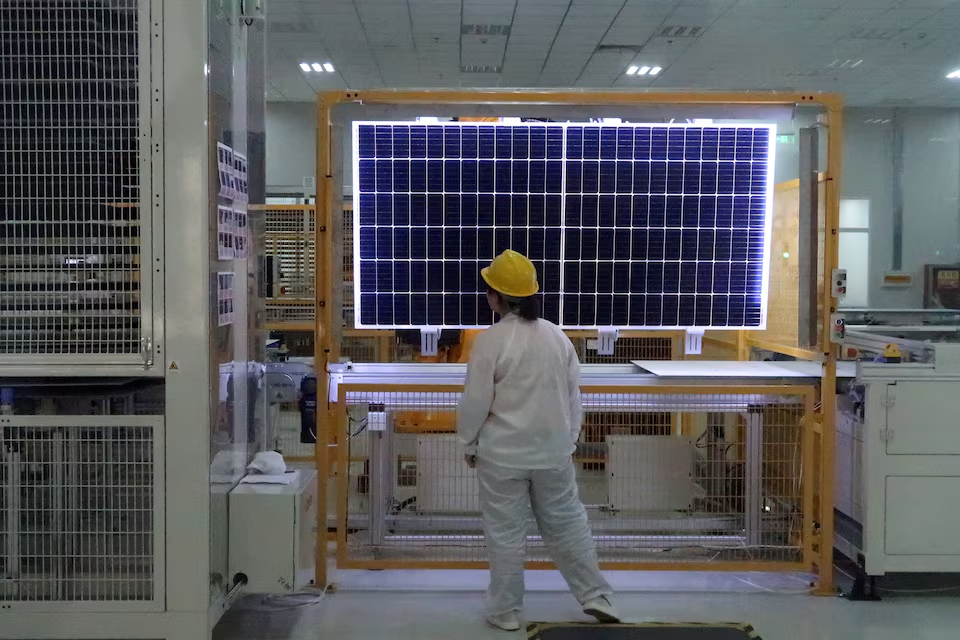
The report also underscores the state of EU battery manufacturing, highlighting a solid midstream industrial base with 252 GWh of nominal cell production capacity in 2025, while noting that significant structural gaps persist.
It notes that while the EU shows strong capabilities in electrolyte and separator production, cathode and anode active material manufacturing remains limited. In addition, more than 90% of existing cell capacity is geared toward electric vehicles rather than stationary storage.
According to SPE, project postponements and relatively high production costs continue to challenge competitiveness, underscoring the need for a more resilient and fully integrated European battery value chain.
“EU battery manufacturing has made significant progress over the past years, but uncertainty remains. Batteries remain renewables’ best allies, essential to integrate clean power, stabilise the system and deliver Europe’s energy transition. Looking ahead, accelerating deployment across all segments will be key to meeting Europe’s goals,” said Antonio Arruebo, lead author of the report and market analyst at SPE.
The EU Battery Storage Market Review 2025 identifies three priority areas for EU action to effectively scale battery storage.
Accelerate deployment of BESS: To speed up the rollout of battery energy storage systems, the report recommends simplifying and accelerating permitting processes for both standalone storage and hybrid projects. Priority should be given to mature, grid-friendly projects in connection queues, while tariff barriers must be addressed to ensure fair access to all power markets.
Build affordable and resilient supply chains: The report calls for targeted support to strengthen EU battery manufacturing through investment and innovation. Ensuring reliable access to critical raw materials, scaling up recycling capacity, and developing strategic global partnerships to diversify supply are all highlighted as essential measures to create a resilient and cost-effective battery supply chain.
Strengthen quality, safety, and sustainability: To improve trust and performance across the battery sector, the report urges harmonization of EU-wide safety standards and incident reporting. It also recommends enhancing regulations for recycling and second-life battery use, alongside implementing robust carbon footprint disclosure across the entire battery value chain.