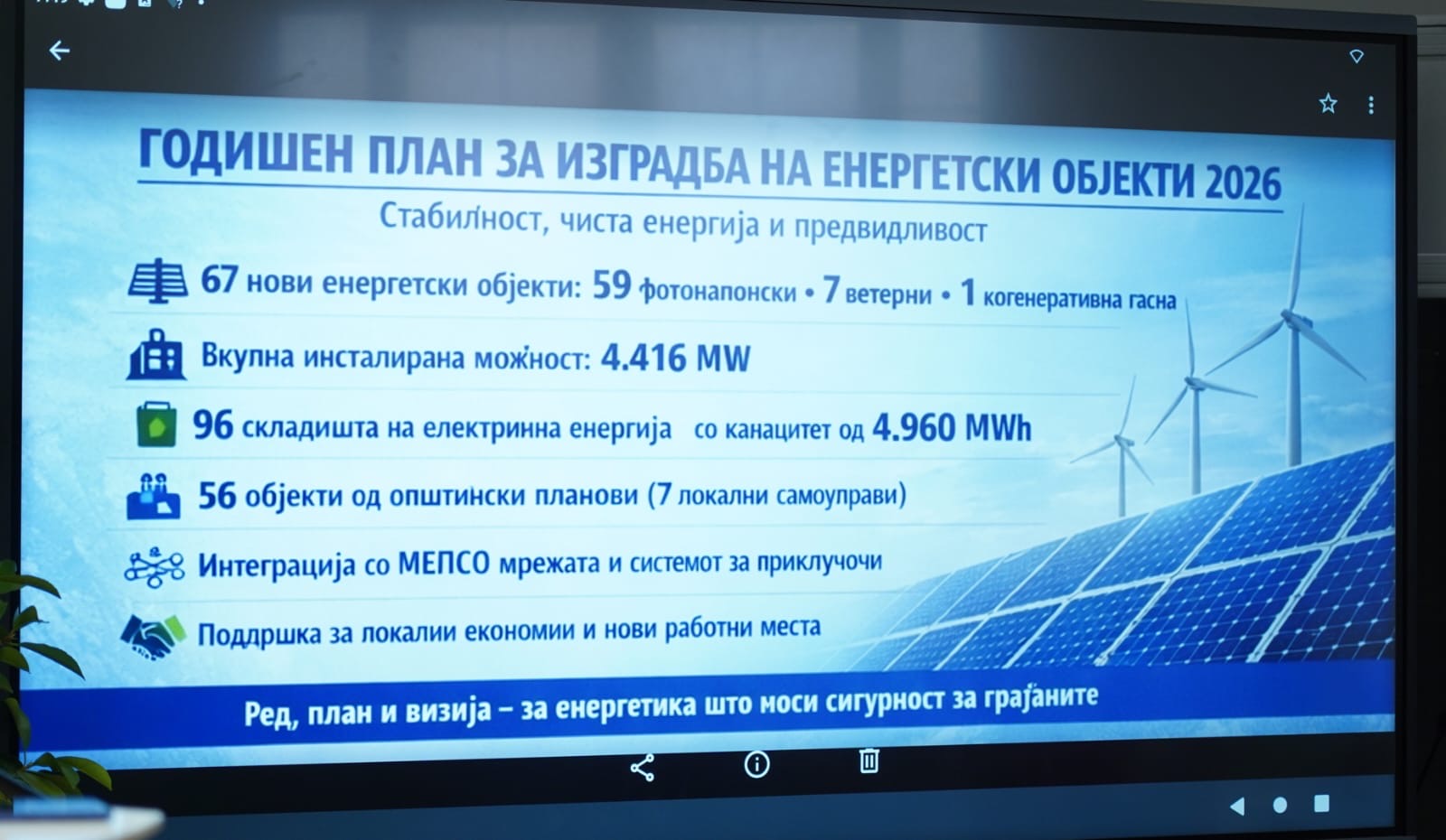
North Macedonia’s 2026 plan includes 67 power plant projects of at least 1 MW each, for investments totaling an estimated EUR 3.74 billion, and 96 acceptable proposals for standalone and co-located energy storage facilities, worth EUR 1.98 billion. The deadlines are to be ascertained at a later stage.
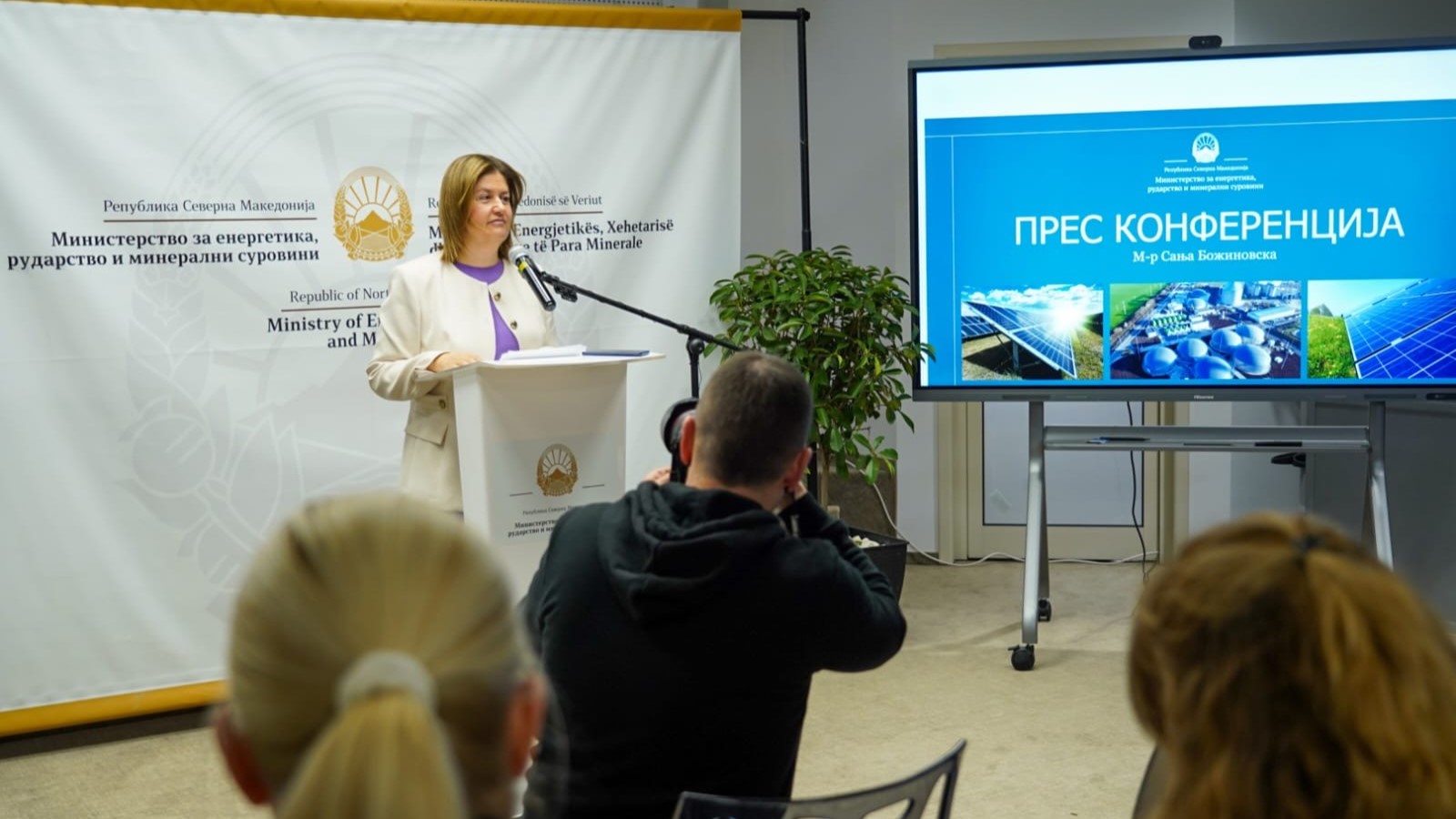
Minister of Energy, Mining and Mineral Resources of North Macedonia Sanja Božinovska presented another annual plan for the construction of power plants and energy storage systems. The Law on Energy of 2025 stipulates adopting one every year.
The ministry approved 67 power plant projects, for facilities of at least 1 MW each, on a first-come, first-served basis. Another section is for co-located energy storage systems and standalone ones of 1 MW and more – where a combined 96 got the green light. The investments amount to EUR 5.72 billion in total, the estimate shows.
The ministry received 284 initiatives overall from developers by the October 1 deadline.
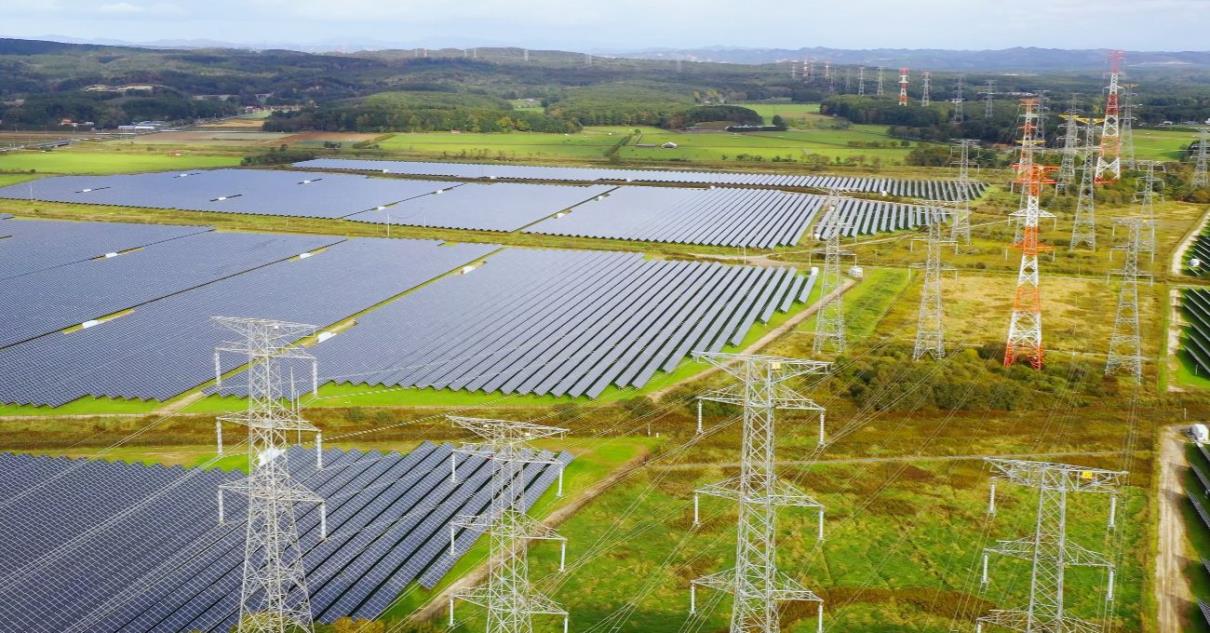
There are 59 photovoltaic projects in the roster, for 3.01 GW altogether and EUR 2.11 billion. The plan contains seven wind power plants of 907.7 MW and for EUR 1.18 billion, respectively. One project is for gas-fired cogeneration, of 495 MW, estimated at EUR 445.5 million.
As for storage, 77 systems would be integrated with either the existing or new power plants. The sum of their envisaged operating power is 1.39 GW, for 3.47 GWh in capacity. It translates to two and a half hours in average duration.
Nineteen initiatives are for standalone storage systems of at least 1 MW. They total 638 MW in capability and 1.49 GWh, averaging two hours and twenty minutes. The ministry estimated investments in energy storage in the two categories at EUR 1.98 billion.
In addition, local authorities in Makedonski Brod, Lozovo, Debrca, Kavadarci, Kumanovo, Brvenica and Kočani submitted municipal energy plans. They contain proposed units of up to 1 MW.
The ministry deemed 56 photovoltaic projects acceptable, for 51.9 MW overall. The 61 energy storage units in the list would have 27.7 MW in operating power and 117.6 MWh in nominal capacity, which means more than four hours on average.
According to the national plan, there are 82 proposed units (including for storage) of more than 10 MW, which means they would be connected to the transmission network. The remaining 148 would be integrated into the electricity distribution network. The number includes the items from the municipal plans.
Within the document is the preliminary grid and market analysis by transmission system operator MEPSO and distribution system operator Elektrodistribucija, produced in cooperation with the ministry.
“Our goal is a clear balance – economic development, environmental protection and a strong public interest. These documents bring order, security and a long-term vision for the energy sector,” Božinovska stressed. She added that the plan would facilitate higher standards, stricter control and clear rules.
Asked about the deadlines for installation, she pointed out it depends on several factors, such as the time required to complete the documentation, obtain equipment from China and secure financing. The government will obligate investors to provide bank guarantees of EUR 25,000 per MW, so it will become clear within three months exactly who is building what and where and how, the minister underscored.