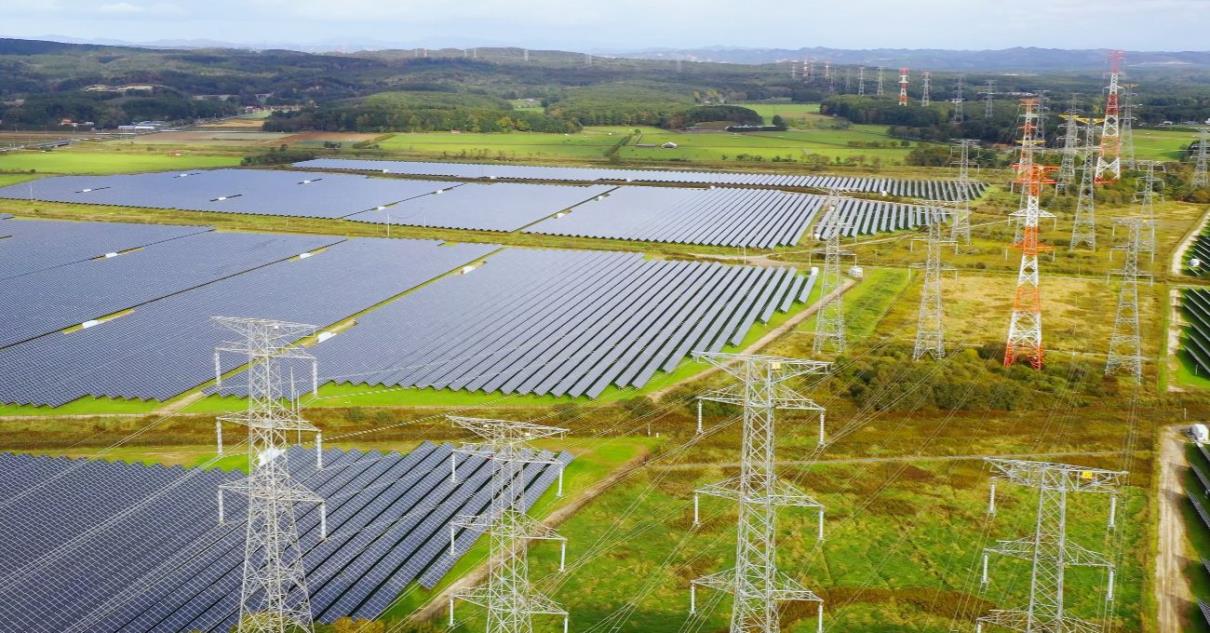
The European solar PPA market keep seeing contract prices decreasing, according to a new report from LevelTen Energy.
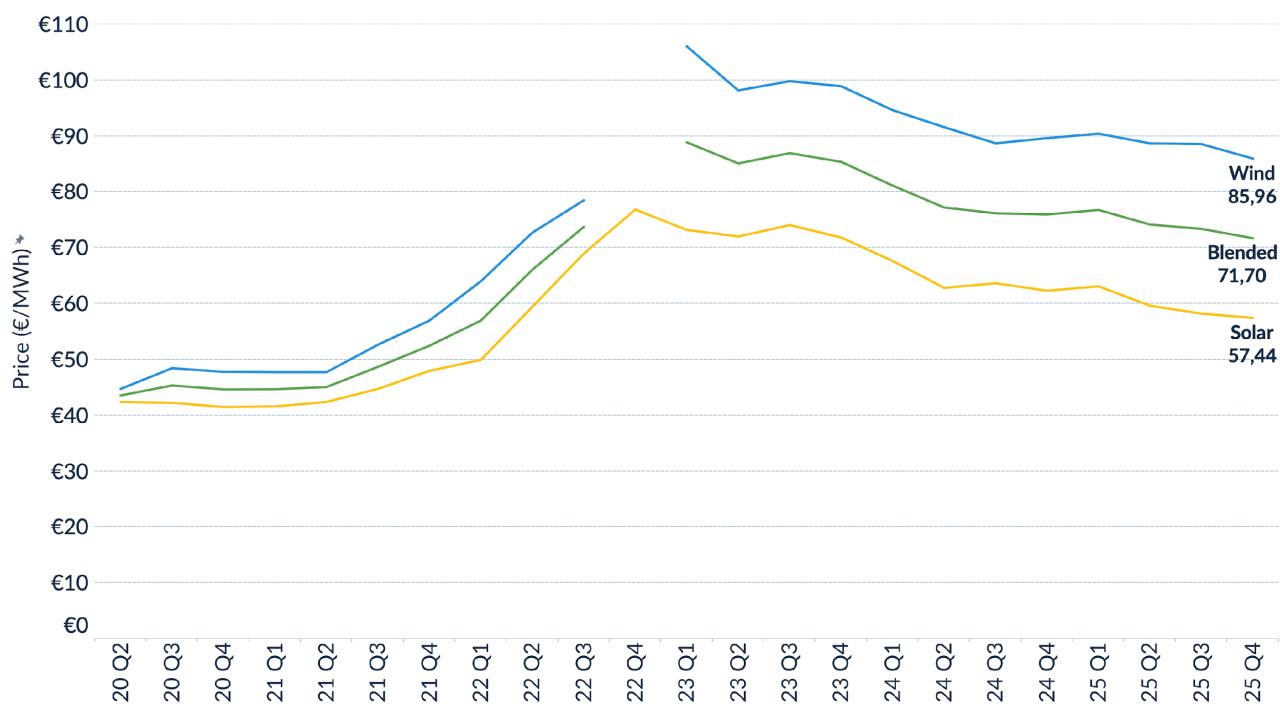
The fourth quarter of 2025 confirms the downward trend in solar PPAs, with a further quarterly drop of 1% in the LevelTen continental index and a year-on-year decline of nearly 8% in the P25. The imbalance between the rapid expansion of renewable supply and slower-growing electricity demand, along with the proliferation of negative prices, is reducing the market value of pure solar generation in multiple countries.
Greece and Germany saw the largest quarter on quarter drops of 4.5%, 4.3%, from €54.0/MWh to €52.50/MWh and from €52.0/MWh to 49.77/MWh, respectively, followed by Italy (-3.7% to €60.67/MWh), Spain (-3.0% to €32.50/MWh), and France (-0.4% to €63.40/MWh).
Denmark and the United Kingdom, by contrast saw an increase of 3.7% to €48.78/MWh and 1.7% to €87.36/MWh, respectively.
Wind power PPA prices also fell in the last quarter (-3%), although the technology continues to offer a more stable production profile and higher capacity factors. This makes it an attractive complement to corporate procurement strategies, particularly in electricity-intensive sectors such as data centers. Markets in Germany, Italy, and the Nordic countries are reinforcing this trend.
Structurally, the European Commission has driven this transition through its “Grids Package,” which aims to modernize networks, accelerate reinforcement and storage projects, and prioritize more mature projects in the connection queue. This reduces the impact of speculative initiatives and acknowledges that massive renewable integration requires not only expanded grid capacity but also increased systemic flexibility.
“Europe's energy system is in a period of transition, as the rapid growth of storage and hybrid project development push the continent into its next chapter of decarbonisation. As the energy pipeline grows more hybridised, so too will the PPA market and corporate offtake needs,” LevelTen said. “Yet, the hybrid PPA space is truly nascent, with standardised approaches to signing such contracts sorely lacking.”