Europe wants more energy security, lower power prices and a stronger industrial base. None of this will happen without faster wind energy deployment and stronger electricity grids. Members of the European Parliament need to agree on strong permitting provisions and EU-wide grid planning, and stand to defend them during the upcoming negotiations. This will determine whether Europe builds the grids it needs, or buries them in more red tape.
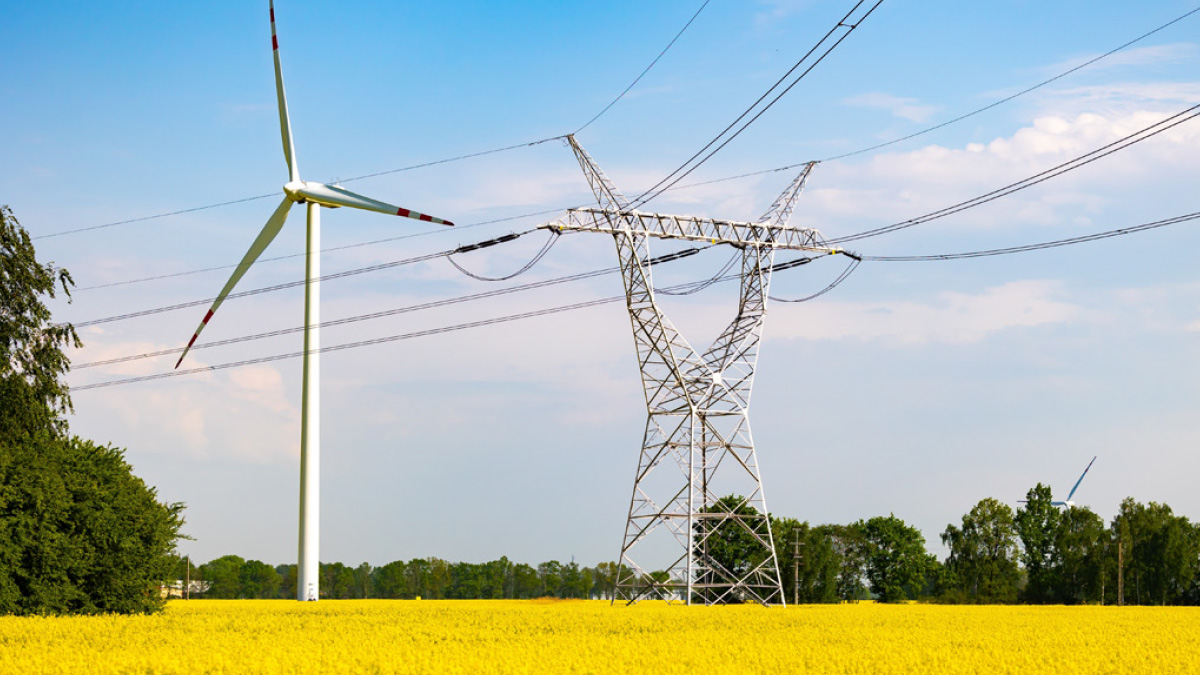
Last week EU Energy Ministers adopted their position on the EU Grids Package. The Package aims to accelerate the build-out of Europe’s electricity grids, improve interconnectivity and speed up the permitting of grids and wind farms. It is an important step. But it is not yet good enough: Member States diluted the permitting provisions and clawed back influence over EU-wide grid planning. Trilogues must now fix both.
The stakes are high. More than 500 GW of wind capacity is stuck waiting for grid connection approval, and permitting procedures remain slow, complex and largely paper-based. Every month of delay pushes back industrial growth, electrification and lower energy bills for households and businesses.
“Europe does not need more bureaucracy. It needs to build more wind farms. In the upcoming negotiations, policymakers now have a choice. They can either cut delays, simplify rules, and give investors the certainty they need. Or they can let new layers of bureaucracy slow Europe down even further. Every delayed permit means delaying industrial growth, electrification and energy savings for households and businesses.” said Tinne van der Straeten, CEO of WindEurope.
Grids: Member States weakened the central scenario
Ministers broadly backed a common framework for planning electricity, hydrogen and gas networks, built around a central scenario developed by the European Commission with input from Member States and stakeholders. Coordinated planning like this helps spot infrastructure gaps early and keeps grid build-out in step with new generation capacity.
But Member States gave themselves a stronger role in shaping the EU-wide grid planning scenario. This risks reintroducing the very fragmentation the central scenario planning was designed to overcome.
The European Parliament should restore stronger EU-wide grid planning coordination. That coordination gives investors and developers the long-term visibility and helps build new grid infrastructure where it is actually needed.
Permitting: Parliament must strengthen what Council diluted
Member States significantly watered down the Commission’s original permitting proposals. The file now moves to the European Parliament, where lawmakers are expected to push for tougher rules and stronger EU coordination. Trilogues should focus on four priorities:
- Digital one-stop shops. Replace fragmented national permitting procedures with a single system where developers can submit and track applications. Parliament should pair this with strong rules on tacit approval and automatic approval of grid connection requests.
- Overriding public interest. Member States should make fuller use of this principle. Germany shows it works: it permitted 21 GW of new onshore wind in 2025, and 2026 figures are on track to beat that. The payoff is visible in the market too. The latest German onshore auction was heavily oversubscribed, pulling the average price of awarded bids down to €51/MWh.
- Lighter community benefit rules. The newly proposed rules are too rigid. They duplicate well-established national schemes, adding cost and red tape without adding value. They should be revised to preserve the diversity of local benefit programmes that already work.
- Repowering-friendly height limits. Europe has huge untapped potential in repowering old wind farms with newer, more efficient turbines. Repowering works best if fewer, bigger turbines are allowed. New height limits would cancel out most of that benefit.
“Europe needs a digital one-stop shop, real tacit approval, wider use of overriding public interest, repowering-friendly height limits and not further complicate existing community benefit rules. EU policymakers must seize this opportunity to cut red tape. Europe’s energy security and competitiveness depend on it.” said Tinne van der Straeten, CEO of WindEurope