

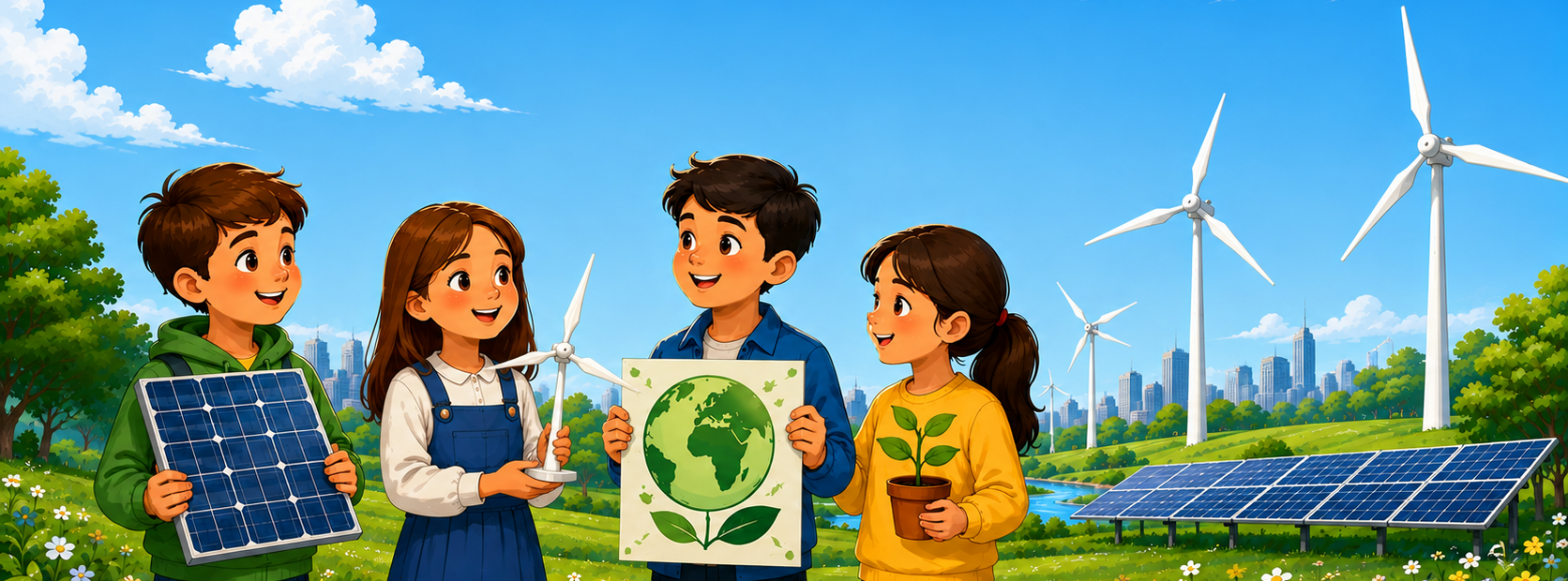
The “Renewables for Schools” section aims to increase students’ interest in energy, technology, and sustainable development topics, while helping them build a basic understanding of cleaner energy solutions for the future.
The information presented in this section has been prepared with the help of AI and is intended for general educational purposes. The main goal of this content is to introduce secondary school students to basic concepts related to renewable energy, its importance, and environmental impact.
The information provided here is not intended to replace formal educational materials or academic instruction. For more detailed and accurate information, students are encouraged to consult scientific publications, official sources, educational materials from relevant institutions, and other information resources.
What is Renewable Energy?
Energy is an essential part of our daily lives. We use energy to light our homes, charge our phones, power schools and factories, and operate vehicles.
For many years, people have mainly produced energy from fossil fuels such as coal, oil, and natural gas. These resources were formed underground over millions of years and can eventually run out. In addition, burning fossil fuels releases gases that can harm the environment.
Renewable energy is energy produced from natural sources that are continuously replenished and can be used again and again.
Why is it called “Renewable” Energy?
The word “renewable” means something that can be restored or naturally replaced.
For example:
- The Sun rises every day and provides energy.
- Wind is continuously created by natural processes.
- Water resources are renewed through the natural water cycle.
- Plants can grow again and provide organic materials.
When these resources are used responsibly, they can provide energy for a very long time.
Why is Renewable Energy Called Clean and Green Energy?
Renewable energy is often called clean energy because it produces much fewer harmful emissions compared to traditional energy sources.
For example:
- Solar and wind power plants do not burn fuel to generate electricity.
- They produce much less carbon dioxide (CO₂).
- They help reduce the effects of climate change.
That is why renewable energy is also known as green energy — energy that is more environmentally friendly and supports a healthier planet.
Why Do People Use Renewable Energy?
There are several reasons why countries and communities are moving towards renewable energy.
1. Protecting Nature
The use of fossil fuels can cause air pollution and contribute to climate change. Renewable energy helps protect the environment by reducing harmful emissions.
2. Ensuring Energy Security
Oil, gas, and coal resources are limited. Renewable energy helps countries develop alternative sources and reduce dependence on limited resources.
3. Developing New Technologies and Jobs
The renewable energy sector is creating new technologies such as solar panels, wind turbines, and energy storage systems. It also creates new career opportunities for engineers, scientists, and specialists.
4. Providing Energy to Remote Areas
Renewable energy systems can provide electricity to areas that are far from traditional power networks.
Types of Renewable Energy Sources
Solar Energy
The Sun is one of the largest sources of energy for Earth. Solar panels convert sunlight into electricity.
Solar energy is used for:
- Producing electricity in homes and buildings;
- Large-scale solar power plants;
- Heating water.
Wind Energy
Wind energy uses the power of moving air to generate electricity.
Wind turbines have large blades that rotate when the wind blows. This movement powers a generator, which produces electricity.
Hydropower (Water Energy)
Hydropower uses the movement of water to produce electricity.
Flowing water turns turbines in hydropower plants, generating electrical energy.
Rivers and reservoirs can be used as sources of hydropower.
Bioenergy
Bioenergy is produced from organic materials such as plants, agricultural waste, and other biological resources.
Examples include:
- Wood waste;
- Agricultural residues;
- Biogas.
Geothermal Energy
Geothermal energy comes from heat stored inside the Earth.
It can be used for:
- Heating buildings;
- Producing electricity.
Ocean and Marine Energy
The movement of oceans and seas can also be used as an energy source.
Examples include:
- Wave energy;
- Tidal energy;
- Ocean currents.
Why is Renewable Energy Important for the Future?
The world's population is growing, and the demand for energy is increasing. To meet future energy needs, it is important to use energy sources that are reliable and less harmful to nature.
Renewable energy helps with:
- Protecting the environment;
- Creating cleaner air;
- Improving energy independence;
- Building a sustainable future.
The energy of the future is not only about new technologies — it is also about learning how to live in harmony with nature.
Updated: August 2026