Europe's fledgling green hydrogen industry is urging the EU to introduce "made in Europe" requirements for public spending on the sector, warning that without support to scale up quickly, domestic producers risk being overtaken by Chinese rivals.
According to the Reuters, the industry endured a bruising 2025, with many projects cancelled or delayed amid high European energy costs and cheaper fossil fuel-based hydrogen.
Brussels is counting on green hydrogen to help chemicals, steel and fertiliser producers cut emissions. Today, more than 90% of the hydrogen used in European industry still comes from fossil fuels.
Kim Hedegaard, CEO of Power-to-X at Danish engineering company Topsoe, told Reuters that manufacturers backed EU plans for "made in Europe" rules for publicly funded electrolyser purchases - pointing to solar panels as a cautionary tale if the industry fails to scale fast.
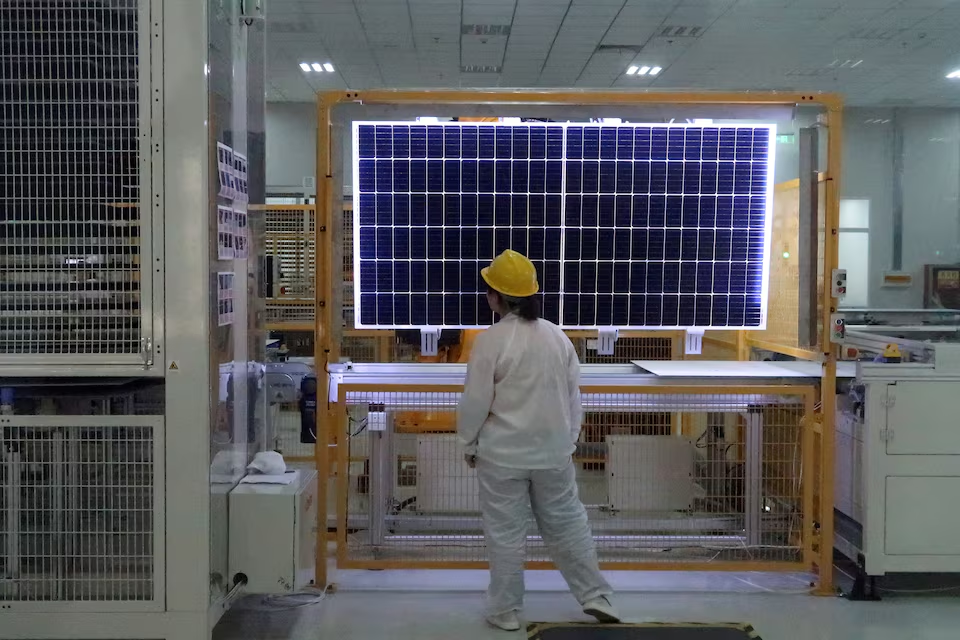
Europe lost most of its solar panel production in the 2000s as Chinese manufacturing costs plunged, leaving the region heavily dependent on imports.
"You can use that as an example of what will happen to the European electrolyser industry if we don't do something different," Hedegaard said.
The European Commission plans this month to propose a law to prioritise European manufacturers in public procurement, aiming to tap the 2.5 trillion euros that EU public authorities spend each year on goods and services.
A draft of the proposals, previously reported by Reuters, included electrolysers. But the plans face pushback from some governments and firms, and officials are still haggling over which technologies to cover - and whether "made in Europe" should include non-EU countries such as Turkey.
Hakon Volldal, CEO of Norwegian electrolyser manufacturer Nel Hydrogen, said European firms were missing out on large-scale projects like those progressing in China, which public contracts could help secure.
"We have technology leadership, but unless we're able to deploy that technology and also learn with that technology, the Chinese will catch up, and they will race past us," he said.
"China is getting an edge ... because of the scale of their projects," said Nicolas de Coignac, CEO of the hydrogen arm of Belgian engineering group John Cockerill.
European Investment Bank President Nadia Calvino this month singled out electrolysers and wind energy as "low-dependency sectors" where Europe can still stay ahead.
"But it will require continued investment in EU value chains," she wrote in a letter seen by Reuters ahead of Thursday's meeting of EU leaders on industrial competitiveness.
China already hosts 60% of global electrolyser manufacturing capacity. European firms still dominate their home market, supplying more than 80% of sales to European projects since 2022, according to the Oxford Institute for Energy Studies.
But there are signs that Chinese companies are making gains. Brussels tightened access for Chinese-supplied projects to the EU's main hydrogen support fund in 2024, after finding many past beneficiaries planned to use cheaper foreign equipment.