Leading German energy companies are exploring opportunities to support Azerbaijan’s green energy transition, modernise its electricity grids and participate in the development of new energy infrastructure projects.
Renewables.az reports that Euronews covered the matter in its report on the German-Azerbaijani Connectivity Conference 2026, organised by AHK Azerbaijan.
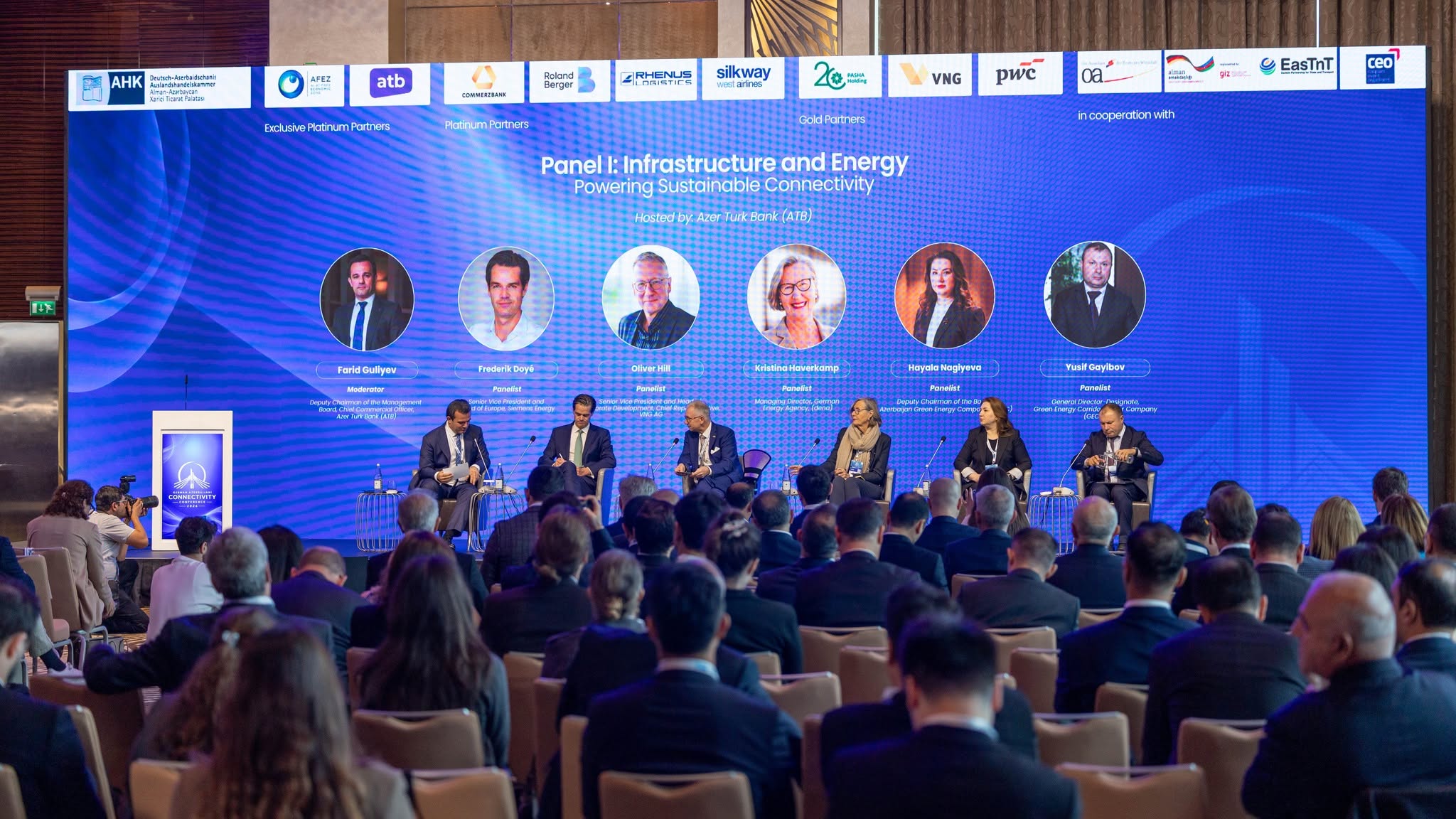
Energy cooperation plans between German companies and Azerbaijan were discussed at the German-Azerbaijani Connectivity Conference 2026, organised by the German-Azerbaijani Chamber of Commerce (AHK Azerbaijan) in Baku.
Frederik Doye, Senior Vice President for Europe at Siemens Energy, emphasised that Azerbaijan’s offshore wind energy potential positions the country as an important link connecting Europe, the South Caucasus and Central Asia.
He said that Siemens Energy was ready to provide the necessary technology and expertise to support Azerbaijan’s renewable energy sector and the planned Caspian-Black Sea-Europe Green Energy Corridor.
Elnur Soltanov, Azerbaijan’s Deputy Minister of Energy, said that the country plans to develop 8 GW of solar and wind energy projects by 2032.
He noted that key priorities include renewable energy, energy connectivity, energy efficiency and the broader energy transition.
According to Soltanov, several routes are being considered to deliver Azerbaijan’s green energy potential to European markets. These include the Caspian-Black Sea-Europe Green Energy Corridor, the Central Asia-Azerbaijan Corridor, and connections to Türkiye and Europe via Georgia and Nakhchivan.
The conference also addressed the modernisation of electricity grids, the deployment of battery energy storage systems (BESS) and the development of electric vehicle charging infrastructure.
Julia Egel, Head of Stakeholder Engagement at AHK Azerbaijan, said that German companies could contribute to Azerbaijan’s efforts to increase renewable electricity generation. Azerbaijan aims to raise the share of renewable energy sources in its installed electricity generation capacity to 30% by 2030.
Egel also announced plans for a trade mission of German energy companies to Azerbaijan. The programme is expected to include targeted business-to-business (B2B) meetings, while the possibility of establishing German pavilions at next year’s Baku Energy Week is also being considered.
German gas importer VNG AG has expressed interest in a long-term gas supply agreement with the State Oil Company of Azerbaijan (SOCAR), potentially lasting 15 to 20 years.
The company aims to significantly increase its current import volumes to help stabilise European markets in the short term while supporting the transition towards fully decarbonised energy systems.
VNG AG is also interested in expanding cooperation with SOCAR in biomethane, renewable energy, hydrogen and decarbonised fuels.
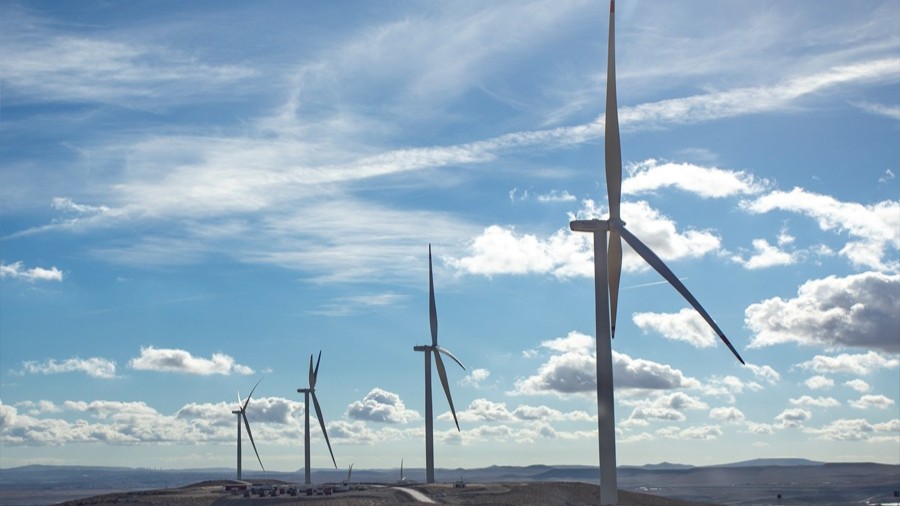
Meanwhile, German wind turbine manufacturer Enercon is exploring the possibility of establishing a local manufacturing facility in Azerbaijan.
Tayfun Bayraktar, a representative of the company, said Enercon was assessing investment opportunities in Azerbaijan and examining how it could establish a presence in the country as a wind turbine manufacturer.
He noted that the company had not yet received a formal proposal. However, successful negotiations could eventually lead to the establishment of a local manufacturing facility with export potential. According to Bayraktar, the scale of any investment would depend on market demand. A single 7 MW wind turbine currently costs approximately €7 million to €8 million.