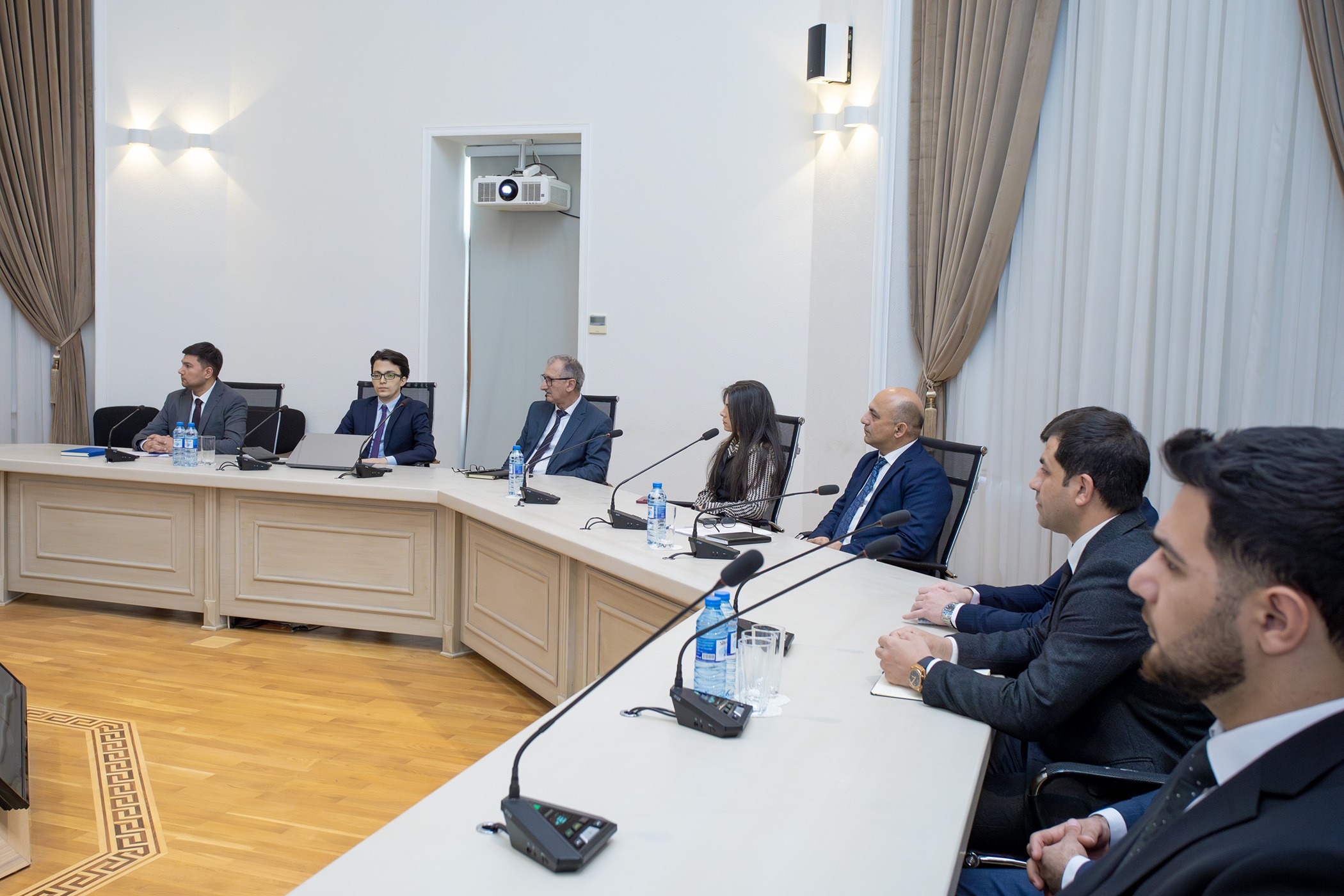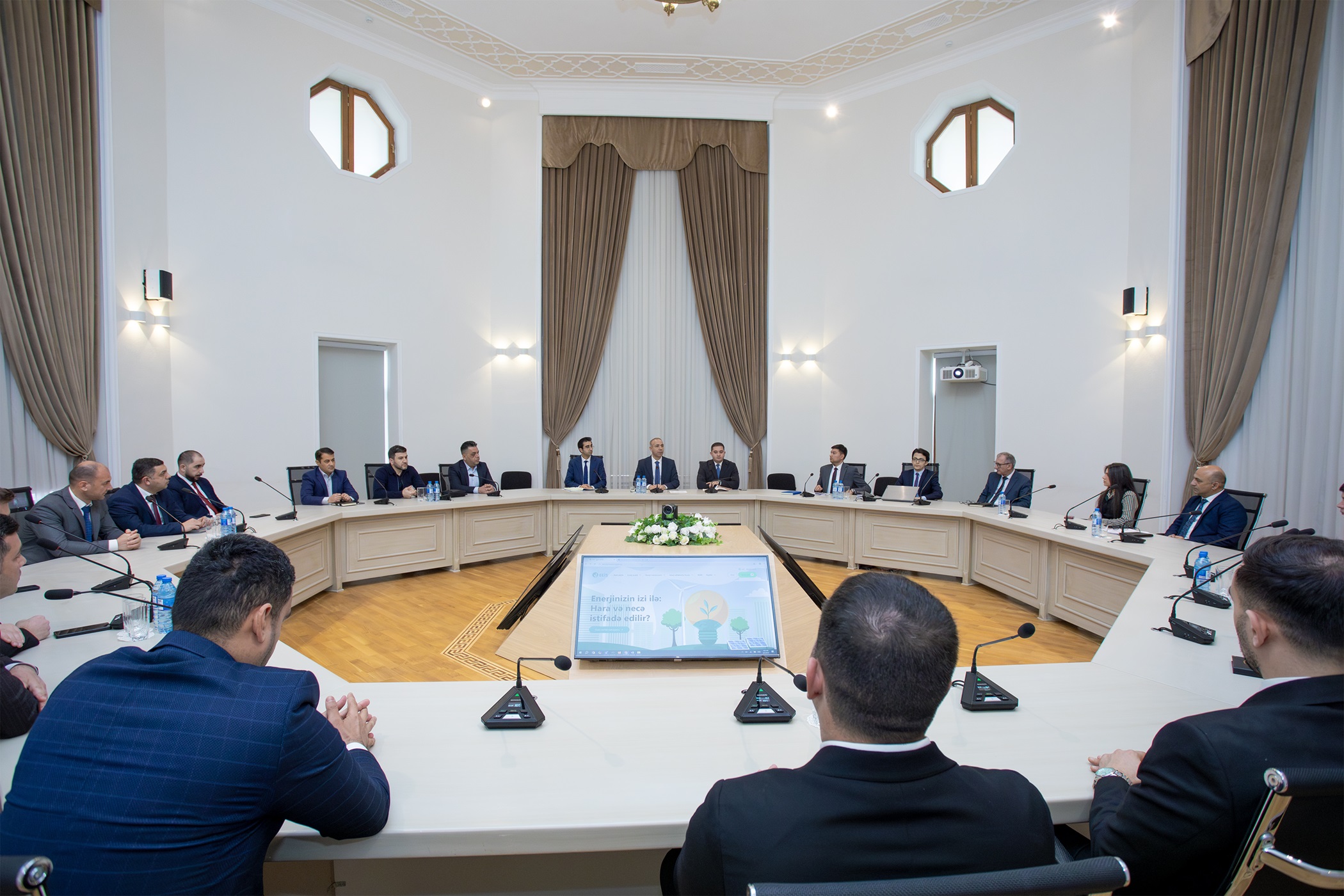
On the occasion of World Energy Efficiency Day, an informational meeting for energy managers was organized at the Ministry of Energy under the chairmanship of Deputy Minister Elnur Soltanov.
During the event, detailed information was provided on the areas of activity, responsibilities, obligations, and reporting mechanisms of energy managers appointed to ensure the efficient use of energy resources, reduce energy losses, and systematically implement energy-saving measures in economic entities and non-residential buildings with high energy consumption.
Within the framework of the meeting, presentations on two topics were delivered. In the presentation related to the Energy Efficiency Information System, energy managers were informed about the rules for using the system and the procedures for entering data. It was noted that it is through this system that information on energy consumption will be provided in the future.
Another presentation focused on the requirements for projects financed by the Energy Efficiency Fund. Energy managers were provided with information on the procedures for applying to the fund to obtain financing for energy efficiency projects.
At the end of the event, questions from the energy managers were answered and an exchange of views was held on improving the efficiency of their activities.
It should be noted that according to the requirements of the current legislation, energy managers are appointed as responsible for ensuring the efficient use of energy in economic entities with an annual energy consumption of more than 1000 tons of oil equivalent and non-residential buildings with an annual energy consumption of more than 250 tons of oil equivalent.
To date, certification procedures related to the appointment of energy managers have been conducted in more than 50 buildings and economic entities, and in many of them energy managers have already officially commenced their activities.
The activities of energy managers create a number of important advantages for enterprises. With their involvement, energy consumption is monitored more systematically, losses are identified and eliminated, and energy-saving measures are implemented in a planned manner. This contributes to reducing energy costs for enterprises, improving the efficiency of production processes, and minimizing environmental impacts.