In accordance with the amendments made to the Law of the Republic of Azerbaijan on Efficient Use of Energy Resources and Energy Efficiency, incandescent lamps are being gradually phased out in Azerbaijan in order to increase energy efficiency, according to the Ministry of Energy.
According to the Law, the production, import, and sale of incandescent lamps with a power rating of 60 watts and above will be prohibited from 1 January 2026, and those with a power rating from 25 watts (including 25 watts) up to 60 watts will be prohibited from 1 July 2026. This prohibition does not apply to incandescent lamps used in industrial production processes, as well as those intended for technological functions other than lighting in industrial equipment.
The calculations conducted show that LED lamps have significant advantages over incandescent lamps in terms of both energy consumption and economic efficiency. For example, one LED lamp with an operating life of 15,000 hours (7 years) replaces 17 incandescent lamps with an operating life of 1,000 hours each. To provide the same luminous flux, a 7-watt LED lamp is sufficient compared to a 60-watt incandescent lamp. As a result, while the total lighting cost of an LED lamp amounts to 14.4 AZN, this figure reaches 82.2 AZN for incandescent lamps.
According to calculations, the use of 1 million 60-watt incandescent lamps over one year leads to the consumption of 131.4 million kWh of electricity, requires 29.1 million cubic meters of natural gas for electricity generation, and results in 63.6 thousand tons of carbon emissions. When switching to the same number of LED lamps, electricity consumption, fuel use, and carbon emissions decrease by 8.6 times. If 50% of the existing 2.7 million household subscribers abandon incandescent lamps and switch to LED lamps, electricity consumption for daily lighting purposes could decrease from 4.86 million kWh to 567 thousand kWh.
In addition, LED lamps are considered safer for eye health due to their low flicker level (1%). In incandescent lamps, this indicator is 13 percent. In addition, LED lamps do not contain mercury and other toxic substances, emit little heat, have a long service life, and are more resistant to voltage fluctuations.
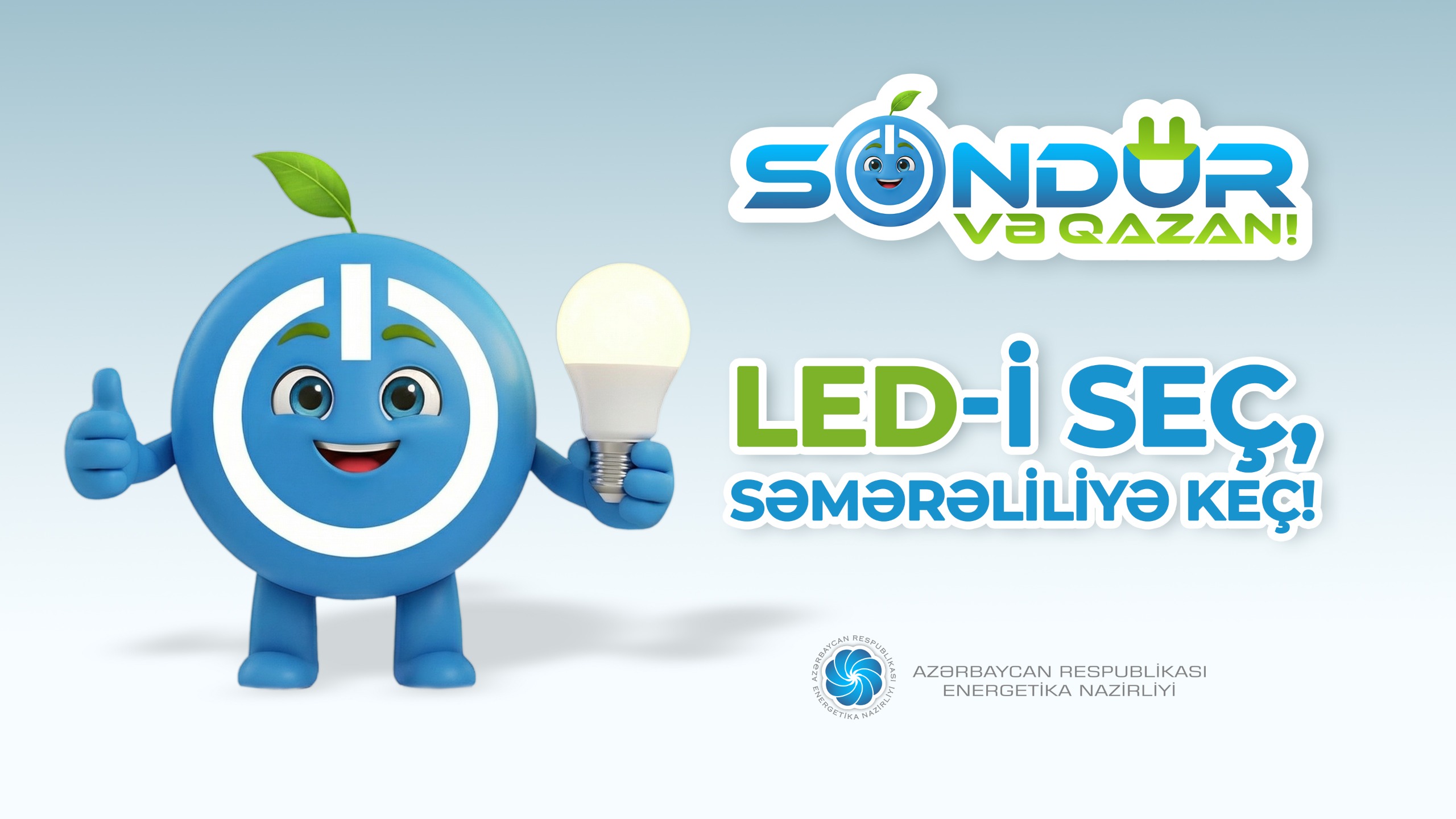
The phased withdrawal of incandescent lamps from circulation and the transition to LED technologies serve to increase energy efficiency in our country, reduce consumer costs, minimize negative environmental impacts and form a culture of sustainable energy consumption. Therefore, it is recommended that citizens and business entities give preference to energy-efficient lighting solutions.