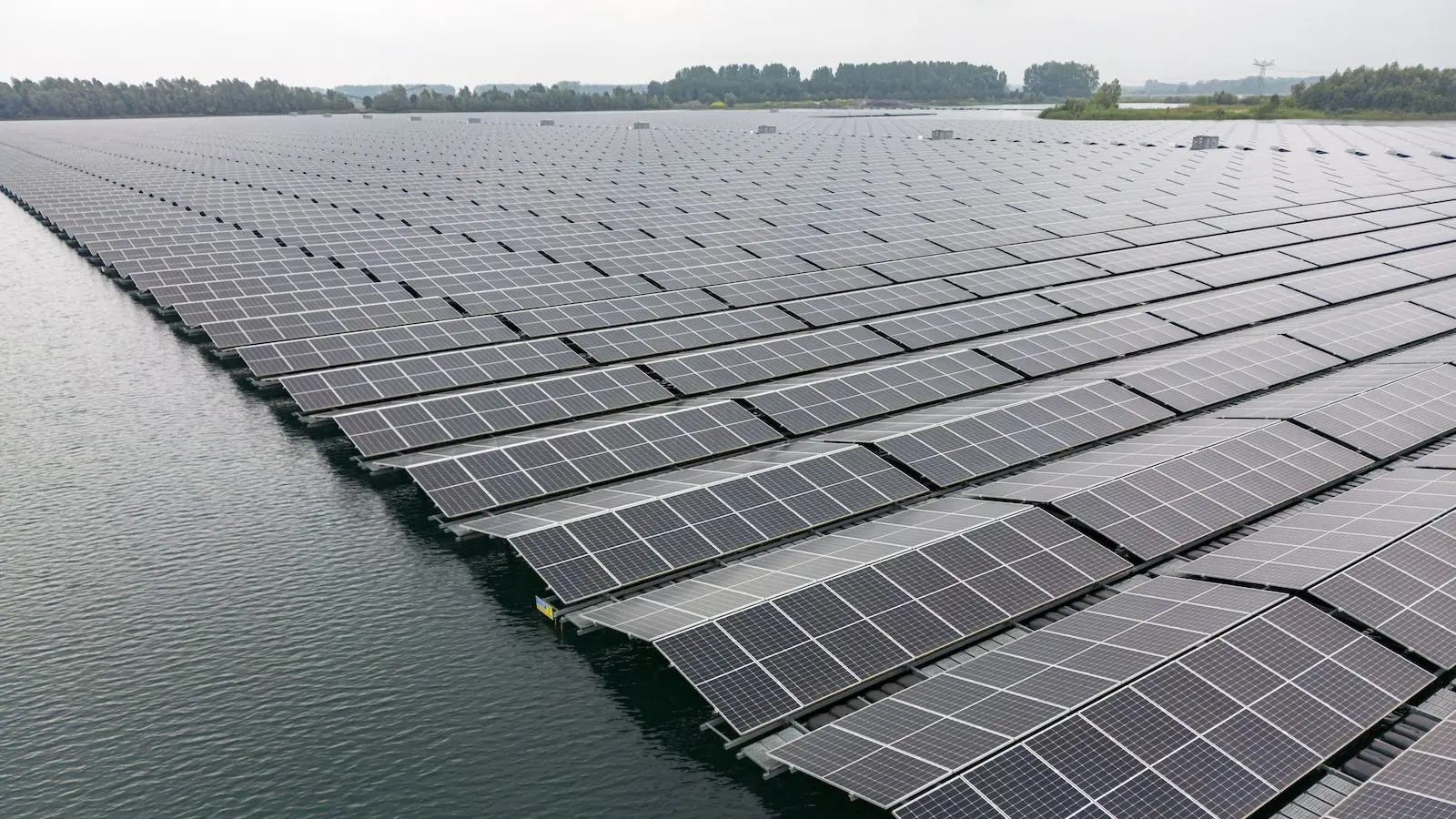
Zimbabwe is set to begin building a 600 MW floating solar power plant next year.
The Kariba floating solar power plant will be located on Lake Kariba, the world's largest artificial lake and reservoir by volume, on Zimbabwe’s northern border with Zambia.
Government officials have said the project will be implemented in three phases over a five-year period, starting with a 150 MW phase to commence during the second quarter of next year.
Speaking to local press earlier this week, Anxious Masuka, the country's Minister of Lands, Agriculture, Fisheries, Water and Rural Development, said the project will have a “minimal footprint” covering 10 km2, or around 1% of the total surface area.
“It is a novel development for Zimbabwe,” he added. “It will be the first floating solar and scientists and engineers tell us that solar on water is more efficient than solar on land.”
Total project costs are expected to end up between $550 million and $650 million, the minister said, before adding the project could generate up to $4.7 billion for the country’s economy, close to 10% of Zimbabwe’s GDP.
It will be funded through private sector financing after the government was approached by investors. Earlier this year, the African Export-Import Bank committed $4.4 million to finance bankability and feasibility studies for a hybrid floating solar project on Lake Kariba.
It is currently envisaged that the project will be completed by 2031, by which point Zimbabwe could roll out similar projects at its dams across the country, Minister Masuka added. He also said the project requires permission from the Zambezi River Authority, a bilateral organization equally owned by Zambia and Zimbabwe that operates, maintains and regulates Lake Kariba, to proceed.
According to the Africa Solar Industry Association’s (AFSIA) project database, Zimbabwe currently has 203.3 MW of operational solar, 45.7 MW of which has come online in 2025.