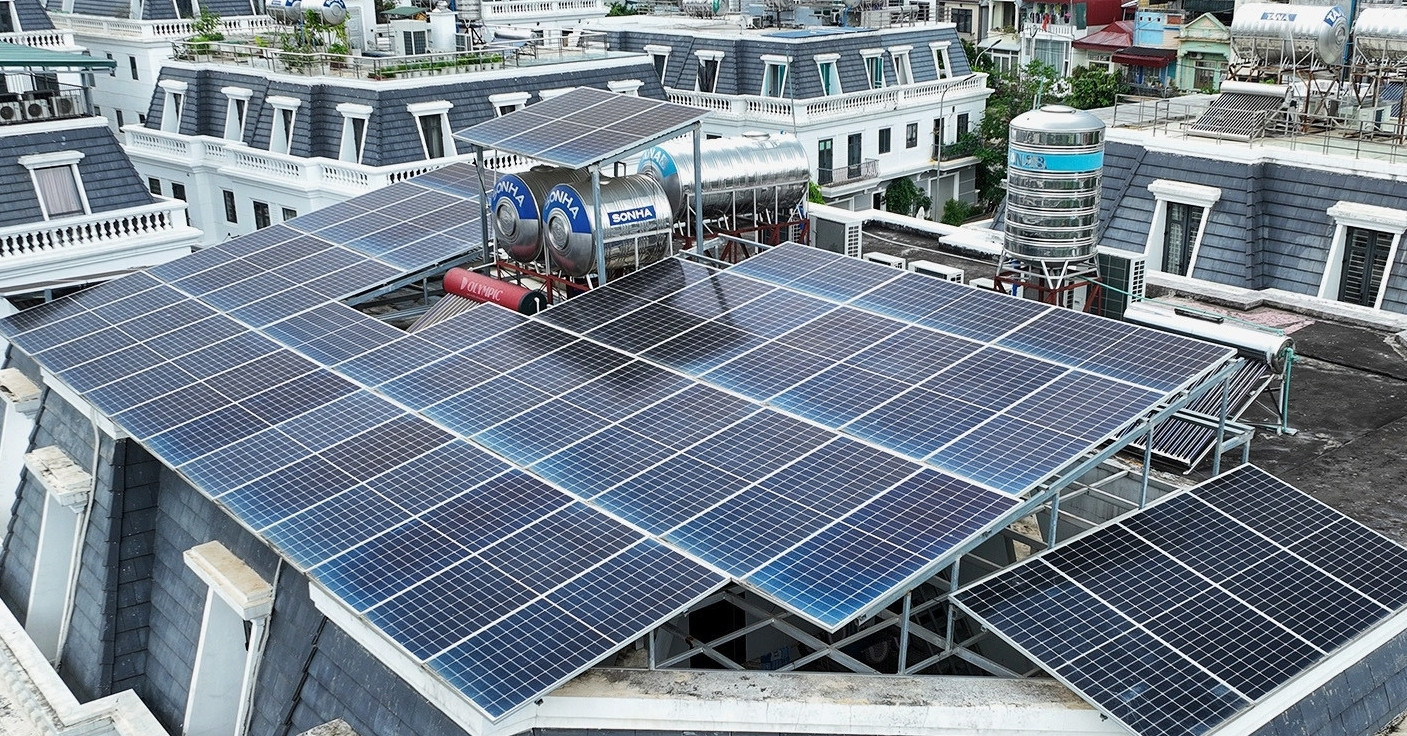
Vietnam’s Ministry of Industry and Trade is considering allowing owners of rooftop solar systems to sell up to 50% of surplus energy to the national grid, up from a current 20% cap.
The proposal forms part of draft amendments to Decree 57 and 58 of the country’s Electricity Law, recently submitted to the Ministry of Justice for review.
The current 20% cap was first announced as part of amendments to Vietnam’s net-metering scheme in September 2024. The decree draft stipulates increasing this cap would encourage the development of rooftop solar through to 2030 in line with the country’s national development plan.
The draft sets a purchase price for the surplus energy at the average electricity price from the year prior, as determined by the market operator, but says it must not exceed the ceiling rate for ground-mounted solar.
It also suggests that surplus electricity could be sold from rooftop solar on public buildings, including government offices, hospitals and schools, and proposes that in areas not yet connected to Vietnam’s national grid, in particular mountainous, border, and island areas, the cap on surplus sales could be removed altogether.
In October, Vietnam’s Ministry of Industry and Trade suggested a set of financial mechanisms to support the uptake of residential solar and storage for self consumption, including investment capital and preferential loans.
The country’s Electricity Development Strategy has set a target of having half of office buildings and residential houses using self-produced and self-consumed rooftop solar power by the end of the decade.